

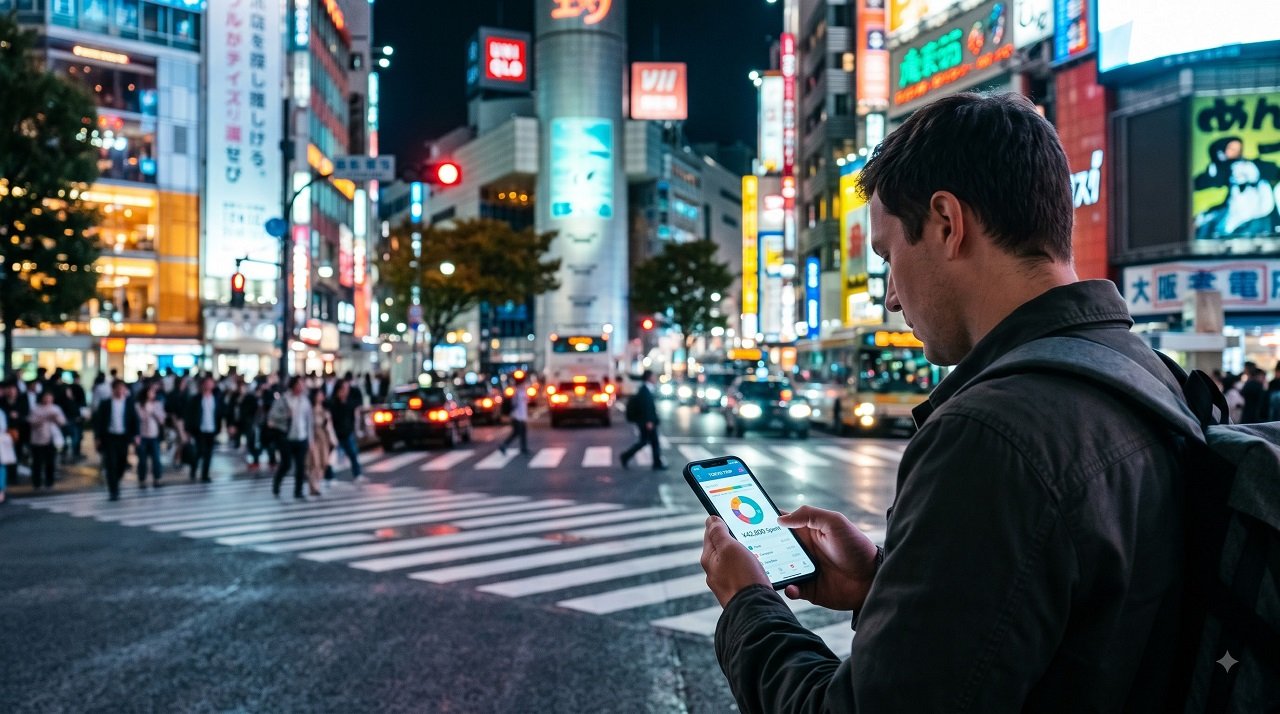
All prices and cost figures in this guide reflect data verified in 2026. Exchange rates, transport fares, accommodation rates, and attraction prices change regularly — sometimes within months.
If you are reading this in a later year, treat every figure below as a baseline for comparison rather than a current quote. Use it to understand the relative cost of each category, then verify today’s numbers before you book.
To check current figures, see: live USD/JPY exchange rate · official JR Pass pricing · JNTO travel updates. All original sources used for this guide are listed at the end of the article.
Introduction: The Real Cost of a Week in Japan
Japan has a reputation for being expensive. That reputation is outdated in 2026.
The yen is trading at historically weak levels — around 158 yen to the US dollar as of October 2026, compared to roughly 144 yen a year earlier. For foreign visitors, this works out to an effective discount of 25–30% on hotels, meals, and shopping compared to just a few years ago. Japan is, for many travelers, more affordable right now than it has been in decades.-19
But “affordable” is relative, and most online budget guides either give uselessly wide ranges (“$100 to $300 a day”) or omit the categories that matter most. This guide breaks down what a one-week Japan trip actually costs in 2026, category by category, with specific numbers for three travel styles: budget, mid-range, and comfort. Every figure is sourced.
A note on exchange rates: All USD conversions in this guide use approximately 158 yen = $1 USD , the rate as of early October 2026. Exchange rates fluctuate — verify the current rate before finalizing your budget.
The Total Picture — What a Week in Japan Costs
Before breaking down individual categories, here is the all-in total for a one-week trip per person, covering accommodation, food, local transport, and activities — but excluding international flights.
| Travel Style | Per Day (USD) | Per Week (USD) | Per Week (JPY) |
|---|---|---|---|
| Budget | $80–$120 | $560–$840 | ¥88,480–¥132,720 |
| Mid-range | $150–$250 | $1,050–$1,750 | ¥165,900–¥276,500 |
| Comfort/Luxury | $300+ | $2,100+ | ¥331,800+ |
These ranges are consistent across multiple current sources. Budget Your Trip, which aggregates actual travel expenses, reports an average daily spend of $138 (¥21,750) per person** for Japan overall. Wego’s 2026 guide puts budget travelers at **$80–$120 per day** and mid-range at **$150–$250 per day**. Klook estimates a one-week trip at **$900–$1,500 excluding flights.-1-3-19
The wide variation comes down to three decisions: where you sleep, how you eat, and how much you move between cities. Each is covered below.
International Flights — The Biggest Variable
Flight costs vary enormously by departure region, airline, and booking timing. Here are current ranges by origin.
From the United States
Round-trip economy fares from major US cities to Tokyo generally fall between $800 and $1,400, depending on season and booking window. American Airlines has listed round-trip fares from Los Angeles (LAX) to Tokyo (HND) starting at $794**, and from Dallas (DFW) around **$1,138. Momondo data shows off-peak fares to Osaka from the US averaging around $826–$847 in February.
From Europe
Round-trip fares from European cities typically range from €850 to €1,300. JAL has listed fares from Paris (CDG) to Tokyo starting around €1,008, and Turkish Airlines from €1,043. Air France has shown fares from Madrid to Osaka as low as €609 for November travel.
From India
Round-trip fares from India to Japan vary by city and airline. ANA has listed fares from Mumbai to Tokyo starting at ₹64,671, while Cathay Pacific has shown Delhi to Tokyo fares from ₹56,121. Budget options via Southeast Asian carriers can bring the cost below ₹50,000 for round trips.
Flight Cost Tips
- Book 2–4 months in advance for the best balance of availability and price.-3
- Fly midweek rather than on weekends where possible.-3
- Consider flying into Tokyo and out of Osaka (or vice versa) to avoid backtracking and save on domestic transport.-3
- Off-peak timing matters significantly. February, May, June, and October are generally cheaper than cherry blossom season (late March–early April), Golden Week (late April–early May), and the Christmas/New Year period.-3
Accommodation — Where Your Budget Goes
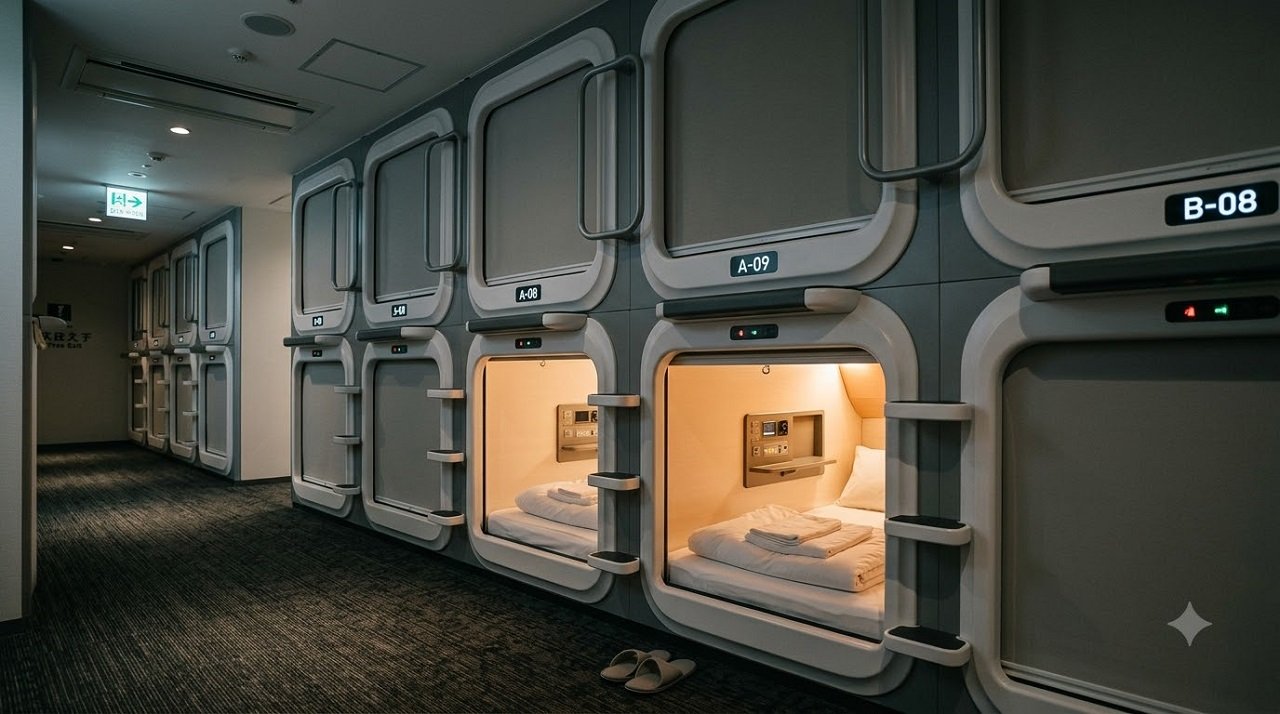
Accommodation is typically the largest single expense for most travelers. Japan offers a wider range of options than many first-time visitors realize, from ¥2,000 ($13) capsule pods** to **¥40,000+ ($250+) ryokan rooms.
Accommodation Types and Typical Costs
| Type | Per Night (JPY) | Per Night (USD) | Notes |
|---|---|---|---|
| Hostel dorm | ¥3,000–¥5,000 | $19–$31 | Budget Your Trip reports an average dorm bed at $24/night across 280+ hostels-2 |
| Capsule hotel | ¥2,000–¥5,000 | $13–$31 | Clean, central, uniquely Japanese-19 |
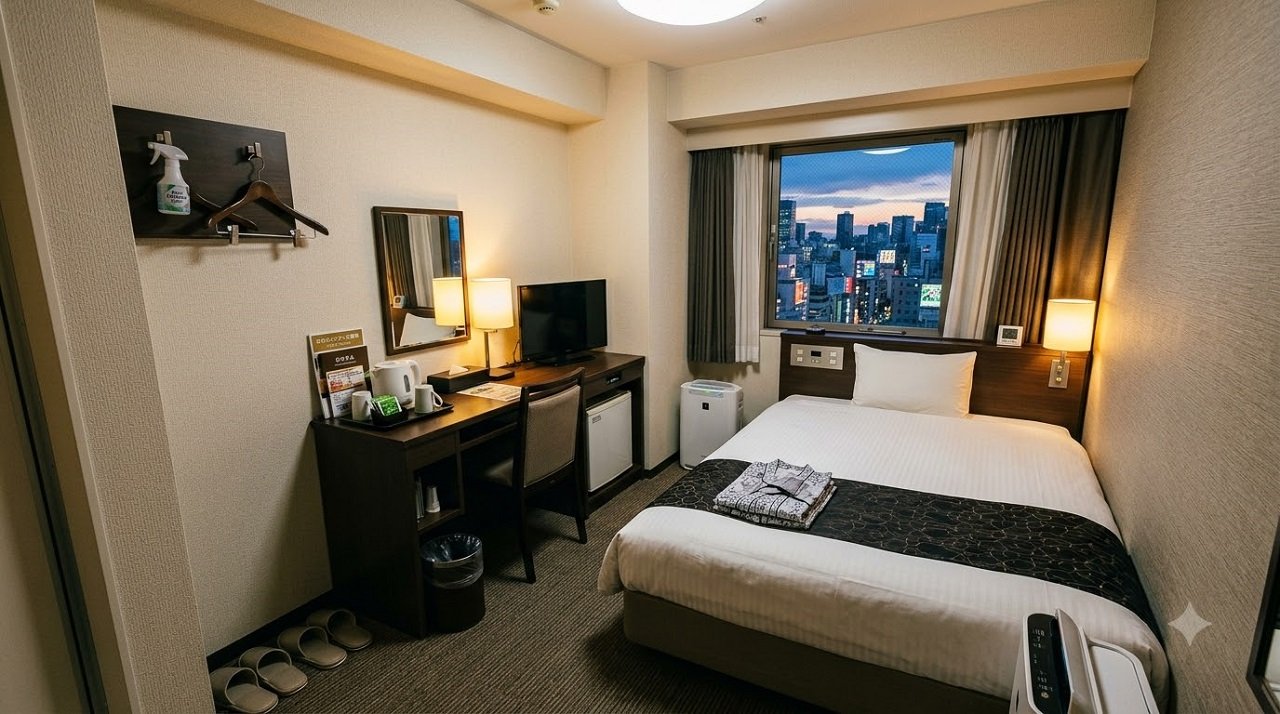
| Business hotel | ¥7,000–¥12,000 | $44–$76 | Toyoko Inn, APA Hotel — small but well-equipped-22 |
| Mid-range hotel | ¥10,000–¥20,000 | $63–$125 | Three-star hotels with more space-19 |
| Ryokan (traditional inn) | ¥15,000–¥40,000 | $95–$250 | Per person, often includes meals-19 |
Current Hotel Rate Context
Nationwide Japanese hotel rates averaged ¥19,851 (about $126)** in July 2026, up 5.7% year-on-year. Tokyo’s average daily rate was notably higher at **¥33,168 (about $210) , while Osaka averaged ¥20,372.
This means that while Tokyo remains Japan’s most expensive city for accommodation, the national average — and especially rates outside major cities — can be considerably lower.
Accommodation Cost for One Week
- Budget: $130–$220 for 7 nights (hostels/capsules)
- Mid-range: $440–$875 for 7 nights (business/mid-range hotels)
- Comfort: $900+ for 7 nights (upper-mid hotels, ryokan stays)
Saving on Accommodation
- Book business hotels outside Tokyo. Osaka, Nagoya, and Fukuoka offer significantly lower rates for comparable quality.-55
- Use capsule hotels for short stays — a distinctly Japanese experience that costs less than a business hotel.-19
- Consider hostels even if you’re not a typical backpacker. Private rooms in hostels often cost less than business hotels while offering more space and social contact.
- Travel in low season. January, February, June, and December are the cheapest months for accommodation.
Food — Japan’s Best Value Surprise
Food in Japan can be remarkably cheap if you know where to eat. The country has a deep culture of affordable, high-quality dining — from convenience stores to standing ramen bars to conveyor-belt sushi.
Typical Food Costs Per Meal
| Meal Type | Cost (JPY) | Cost (USD) |
|---|---|---|
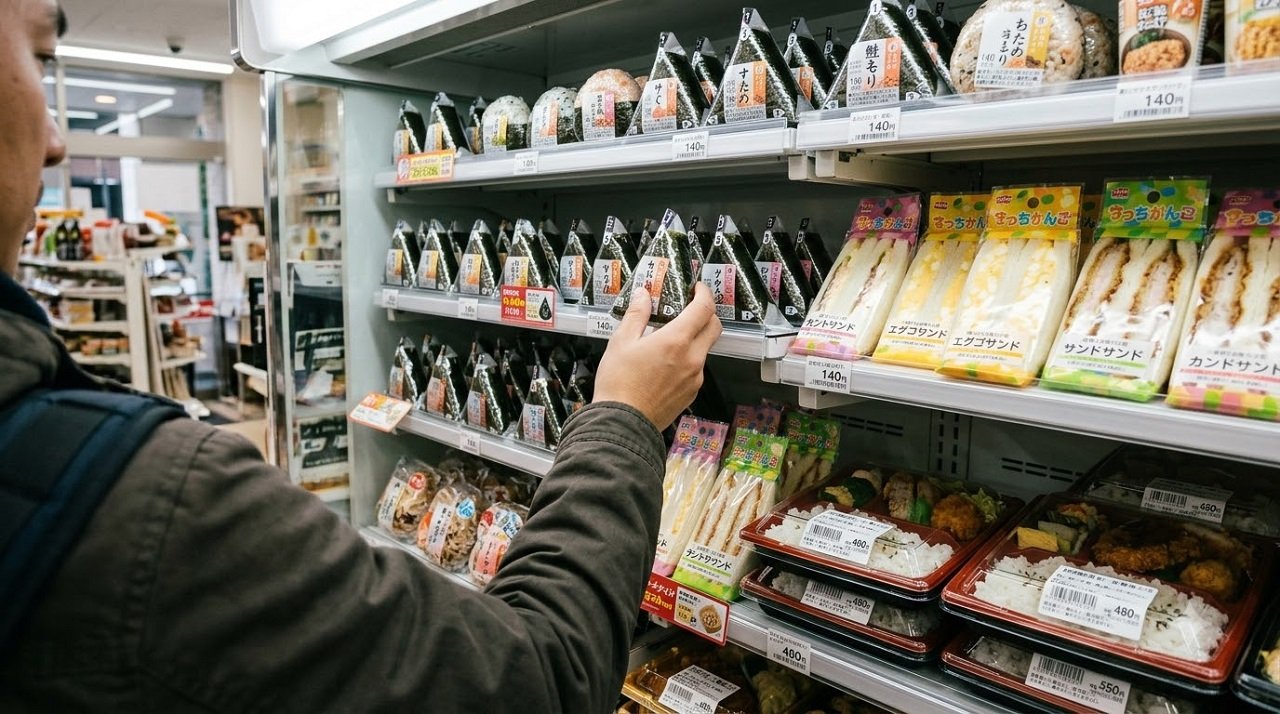
| Convenience store meal (7-Eleven, FamilyMart, Lawson) | ¥400–¥700 | $3–$4 |
| Onigiri (rice ball) | ¥130–¥200 | $1–$1.30 |
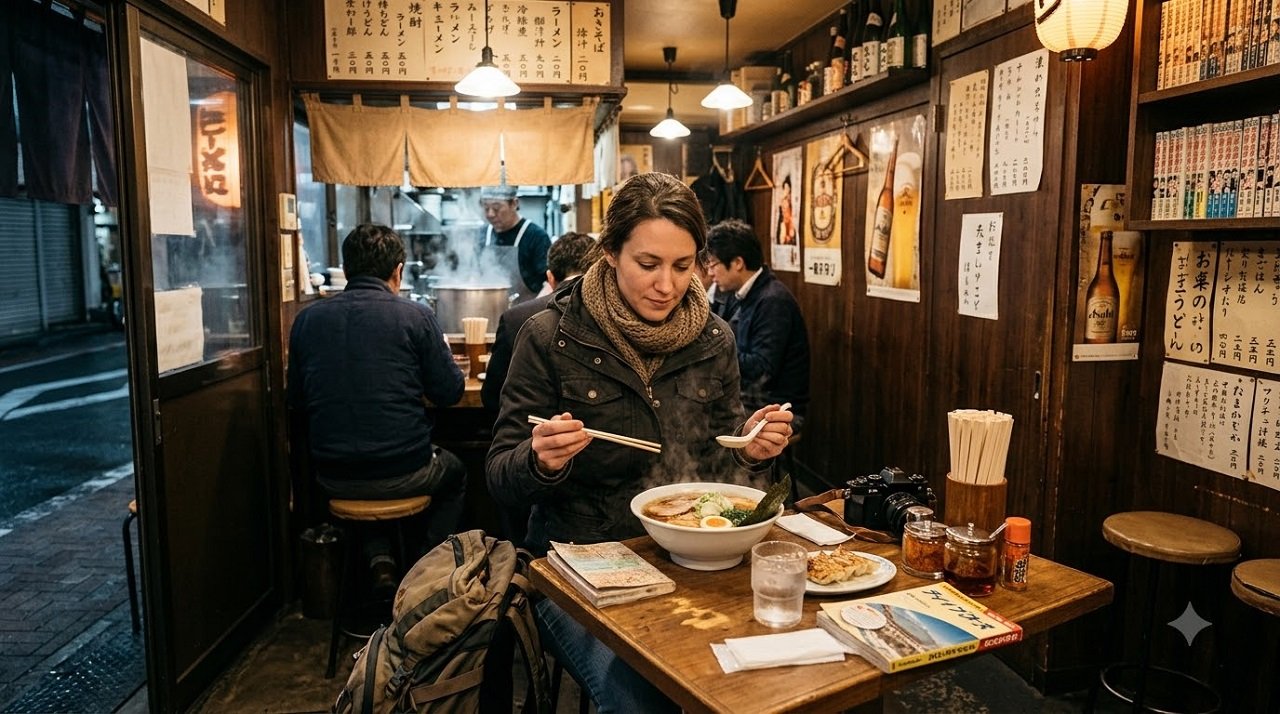
| Ramen or gyudon (standing shop) | ¥500–¥900 | $3–$6 |
| Teishoku (set lunch) | ¥1,000–¥1,500 | $6–$10 |
| Sit-down restaurant dinner | ¥1,500–¥3,000 | $10–$19 |
| Conveyor-belt sushi | ¥100–¥300 per plate | $0.65–$2 per plate |
| Café coffee | ¥400–¥600 | $2.50–$4 |
These figures are consistent across multiple sources. Trip.com‘s real-budget account puts convenience store breakfast at $3–$4, teishoku lunch at $7–$10, and ramen dinner at $8–$12. Wego lists gyudon or ramen at standing shops at ¥500–¥900.-19-55
Daily Food Budget
- Budget: $15–$25 per day (convenience store meals, ramen, gyudon, supermarket bento)
- Mid-range: $30–$50 per day (mix of casual restaurants and sit-down dinners)
- Comfort: $60+ per day (restaurant dining, specialty cuisine, some fine dining)
Saving on Food
- Convenience store meals are genuinely good. Japanese konbini food — onigiri, sandwiches, bento boxes — is fresh, varied, and inexpensive. Eating breakfast and lunch from konbini can cut daily food costs to under $15.
- Look for discounted bento boxes after 8pm. Supermarkets mark down prepared food in the evening.-22
- Eat lunch at restaurants, dinner at casual spots. Many restaurants offer the same dishes at lunch for significantly lower prices than dinner.
- Vending machines for drinks. At ¥110–¥160 ($0.70–$1), they’re cheaper than cafés and everywhere.-22
Transport — Getting Around Japan
Transport costs depend almost entirely on how many cities you plan to visit. Staying in Tokyo for a week is very different from a Tokyo–Kyoto–Osaka circuit.
Local Transport in Cities
Tokyo Metro fares range from ¥180 to ¥330 depending on distance. A Tokyo Subway 24-hour Ticket costs ¥800 for adults (¥1,000 after a March 2026 price revision), with 48-hour and 72-hour options available.
For budgeting purposes:
- Local transport: $3–$6 per day using an IC card (Suica or ICOCA)
- Airport transfer: $10–$30 depending on method (train vs. limousine bus)
Inter-City Transport and the JR Pass
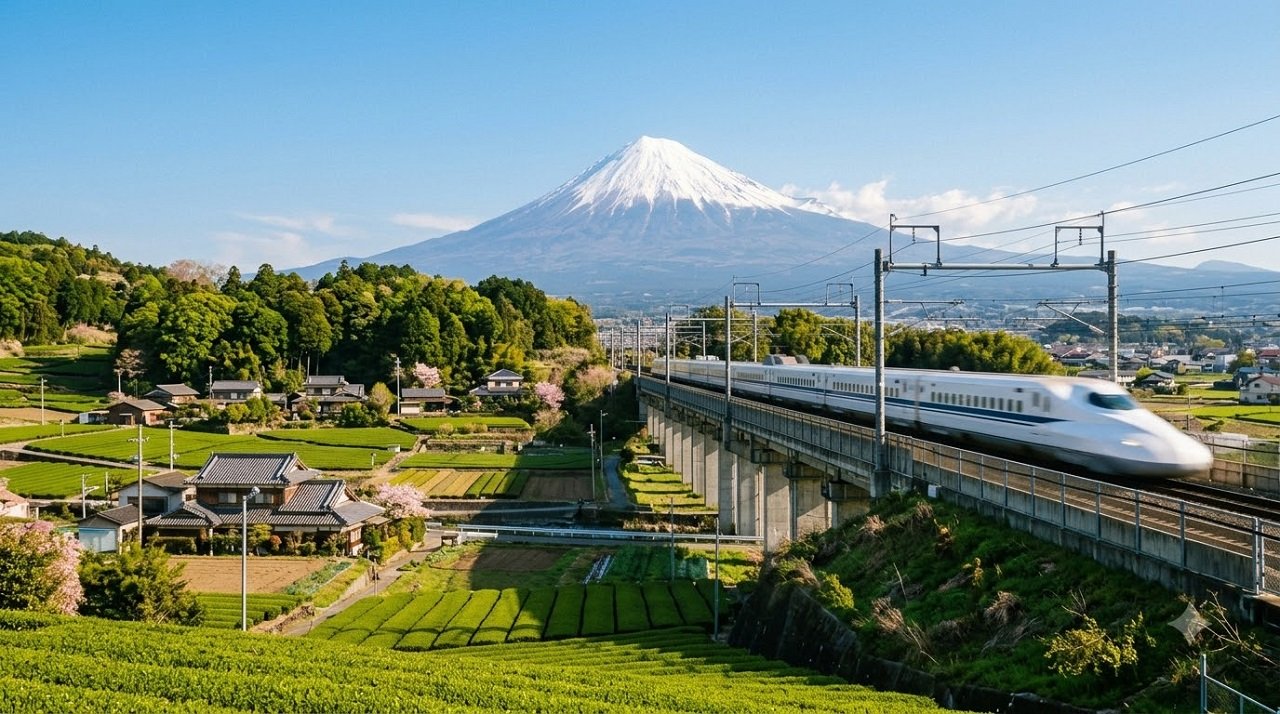
The Japan Rail Pass is the classic option for multi-city travel, but it is not always the best value. Prices increased in October 2026:
| Pass Type | Old Price (JPY) | New Price (JPY) | USD Equivalent |
|---|---|---|---|
| 7-day Ordinary | ¥50,000 | ¥53,000 | ~$335 |
| 14-day Ordinary | ¥80,000 | ¥84,000 | ~$531 |
| 21-day Ordinary | ¥100,000 | ¥105,000 | ~$664 |
Source: JR Group price revision, effective October 1, 2026.-36-37
Is the JR Pass worth it? For a simple Tokyo–Kyoto–Osaka round trip, individual Shinkansen tickets are often cheaper. A one-way Tokyo–Kyoto Shinkansen ticket costs approximately ¥14,000 (about $89). A round trip plus local transport may cost less than a 7-day pass — but a more extensive itinerary (Tokyo–Kyoto–Osaka–Hiroshima, for example) can make the pass worthwhile.-22
A practical rule: Calculate your specific Shinkansen routes and compare. The JR Pass only pays off if you’re covering significant distance across multiple cities within the pass validity period.
Transport Budget for One Week
- Tokyo-only (no JR Pass): $25–$40 total
- Tokyo–Kyoto–Osaka with individual tickets: $200–$250 total (including Shinkansen)
- Multi-city with JR Pass: $335 (pass) + local transport
Activities and Entrance Fees
Japan’s temples, shrines, parks, and many viewpoints are free or very cheap. Paid attractions — museums, theme parks, observation decks — add up quickly if you do several.
Typical Activity Costs
| Activity | Cost (JPY) | Cost (USD) |
|---|---|---|
| Temple or shrine entry | ¥500–¥1,000 | $3–$6 |
| Museum entry (national) | ¥1,000–¥1,800 | $6–$11 |
| teamLab Planets/Borderless | ¥3,800–¥4,200 | $24–$27 |
| Tokyo Disneyland (1-day) | ¥7,900–¥12,400 | $50–$78 |
| Observation deck | ¥1,000–¥2,500 | $6–$16 |
| Free walking tour | Tip-based | $5–$15 tip |
Sources: teamLab Planets tickets start around ¥3,800 ($24). Tokyo Disneyland adult 1-Day Passports range from ¥7,900 to ¥12,400 depending on date, with October 2026 peak pricing reaching the upper end. Temple admission varies: some are free (Toji’s Miedo and Jikido), others charge ¥500–¥1,200 for adults. National museum entry is typically ¥1,000 for adults, free for under-18s and over-70s.
Activity Budget for One Week
- Budget: $30–$60 total (free temples, parks, one paid attraction)
- Mid-range: $80–$150 total (several paid attractions, maybe Disney or teamLab)
- Comfort: $200+ total (multiple theme parks, premium experiences, guided tours)
Additional Costs Often Overlooked
These are the categories most budget guides omit — and they add up.
| Item | Typical Cost (USD) |
|---|---|
| Travel insurance | $30–$100 for one week (Squaremouth reports average $30/day for Japan coverage) |
| eSIM / data plan | $5–$20 for one week (povo’s 10GB/7-day plan is ¥1,430) |
| Souvenirs and gifts | $50–$200+ depending on preferences |
| Airport transport | $10–$30 each way |
| Luggage storage / lockers | $3–$8 per day |
| Emergency buffer | 10–15% of total budget recommended |
Three Complete One-Week Scenarios
Here are three realistic budgets for a one-week Japan trip, including flights from the US.
Scenario A: Budget Traveler (Solo)
| Category | Cost (USD) |
|---|---|
| Flights (round-trip from US, booked in advance) | $850 |
| Accommodation (7 nights hostel/capsule @ $25) | $175 |
| Food (7 days @ $20) | $140 |
| Local transport (7 days @ $5) | $35 |
| Shinkansen (Tokyo–Kyoto round trip, individual tickets) | $180 |
| Activities | $50 |
| Travel insurance | $50 |
| eSIM | $15 |
| Total | $1,495 |
Scenario B: Mid-Range Traveler (Solo)
| Category | Cost (USD) |
|---|---|
| Flights (round-trip from US, booked in advance) | $1,000 |
| Accommodation (7 nights business hotel @ $70) | $490 |
| Food (7 days @ $40) | $280 |
| Local transport | $40 |
| Shinkansen (Tokyo–Kyoto–Osaka, individual tickets) | $250 |
| Activities | $120 |
| Travel insurance | $50 |
| eSIM | $15 |
| Total | $2,245 |
Scenario C: Comfort Traveler (Solo)
| Category | Cost (USD) |
|---|---|
| Flights (round-trip from US) | $1,200 |
| Accommodation (7 nights mid-range hotel @ $150) | $1,050 |
| Food (7 days @ $70) | $490 |
| Transport (including taxis) | $150 |
| Shinkansen + JR Pass | $400 |
| Activities (including Disney/teamLab) | $200 |
| Travel insurance | $50 |
| eSIM | $15 |
| Total | $3,555 |
How to Save on a Japan Trip
- Travel in low season. February, May, June, and October are consistently cheaper for both flights and accommodation.
- Fly into one city and out of another. Open-jaw tickets eliminate backtracking and can reduce transport costs.-3
- Eat like a local. Konbini breakfasts, standing ramen shops, and conveyor-belt sushi keep food costs very low without sacrificing quality.
- Skip the JR Pass if your itinerary is simple. Calculate individual ticket costs first — for a Tokyo–Kyoto–Osaka round trip, individual tickets are often cheaper.
- Use IC cards for local transport. Suica and ICOCA work across trains, buses, and even vending machines.-22
- Book accommodation outside Tokyo where possible. Osaka hotel rates averaged 13.9% lower than Tokyo in mid-2026.
- Take advantage of free attractions. Shrines, parks, markets, and many observation areas cost nothing.
Frequently Asked Questions
Is Japan expensive to visit in 2026?
Japan is currently cheaper than its reputation suggests. The weak yen (around 158 to the dollar as of October 2026) gives foreign visitors an effective 25–30% discount on many expenses. Budget travelers can manage on $80–$120 per day, mid-range on $150–$250 per day.-19
How much does a one-week trip to Japan cost?
Excluding international flights: $560–$840 for budget travelers, $1,050–$1,750 for mid-range, and $2,100+** for comfort. Including flights from the US, total costs range from roughly **$1,400 to $3,500 per person.
Is the JR Pass worth it in 2026?
It depends on your itinerary. After the October 2026 price increase, a 7-day pass costs ¥53,000 ($335). For a simple Tokyo–Kyoto–Osaka round trip, individual Shinkansen tickets are often cheaper. The pass pays off for multi-city itineraries covering significant distance.-36
What is a realistic daily budget for Japan?
Budget Your Trip reports an average daily spend of $138 per person**. Budget travelers spend around **$56 per day, mid-range travelers around $142 per day**, and luxury travelers around **$358 per day.-1
How much should I budget for food in Japan?
Food can be very affordable. Convenience store meals cost $3–$5, ramen or gyudon $3–$6, and sit-down dinners $10–$19. Daily food budgets range from $15–$25 (budget) to $30–$50 (mid-range).
Sources
- Budget Your Trip. Japan Travel Budget. Published August 16, 2026. Average daily cost $138; budget travelers $56/day; mid-range $142/day. https://www.budgetyourtrip.com/Japan-1
- Budget Your Trip. Is Japan Expensive to Visit? Published October 2, 2026. One-week trip costs $991 per person on average; hostel dorm average $24/night. https://www.budgetyourtrip.com/japan/expensive-JP-2
- Klook. Your Ultimate Budget Travel Guide to Japan. Updated March 6, 2026. 1-week trip $900–$1,500 excluding flights; daily breakdown by category. https://www.klook.com/blog/japan-budget-travel/-3
- Wego Travel Blog. Is Japan Cheap? A Real 2026 Budget Guide for Travelers. Updated June 24, 2026. Yen at ~161 to USD; budget $80–$120/day; mid-range $150–$250/day; accommodation and food breakdowns. https://blog.wego.com/is-japan-cheap/-19
- HelloSIM. Japan Reisebudget & Kosten Guide. June 28, 2026. Daily budgets: budget ¥8,000–12,000; mid-range ¥15,000–25,000; JR Pass ¥50,000. https://hellosim.net/de/resources/blog/japan-budget-22
- Japan National Tourism Organization (JNTO). Price Increases are Coming to the Nationwide Japan Rail Pass (2026). April 20, 2026. JR Pass price table. https://www.japan.travel/en/ca/news/price-increases-are-coming-to-the-nationwide-japan-rail-pass-2026/-36
- JR Group. Price Changes for the Japan Rail Pass. April 9, 2026. Official price revision PDF. https://japanrailpass.net/assets/pdf/JRP_Price_Changes_En.pdf-37
- Trip.com. How Much Does a One-Month Trip to Japan Cost — A Realistic Solo Budget. April 4, 2026. Flights $600–800; food $15–20/day; business hotels $25–35/night. https://kr.trip.com/moments/detail/tokyo-294-143898743/-55
- Squaremouth. Japan Travel Insurance: Plans & Prices (2026). September 1, 2026. Average travel insurance spend $504 for Japan; $30/day for a 17-day trip. https://www.squaremouth.com
- povo. Japan SIM eSIM Plans. March 19, 2026. 10GB/7-day plan ¥1,430; 20GB/30-day plan ¥2,700. https://povo.jp
- Tokyo Metro. Ticket fares. 2026. Single fares ¥180–330; 24-hour ticket ¥800 (¥1,000 after March 2026 revision). https://www.tokyometro.jp
- Federal Reserve. Foreign Exchange Rates. June 2026. USD/JPY at 160.77 for June 2026. https://www.federalreserve.gov
- Tokyo Disney Resort. Ticket prices. September 2026. Adult 1-Day Passport ¥7,900–¥12,400. https://www.tokyodisneyresort.co.jp
- teamLab. Ticket prices. 2026. teamLab Planets from ~$24–$27. https://www.teamlab.art