


All premium figures, coverage limits, and cost percentages in this guide reflect data verified in 2026. Insurance pricing, policy terms, and regulatory requirements vary by country and change regularly.
If you are reading this in a later year, treat the cost ranges and coverage comparisons as a baseline for understanding how insurance is structured — not as current quotes. Policy wordings differ significantly between insurers and between markets.
This guide is general information, not financial or legal advice. Always read the actual policy documents before purchasing. Coverage terms, exclusions, and claim procedures are governed by the specific policy you buy, not by this article.
Verify current premium estimates at: Squaremouth · MoneyGeek. All sources used in this guide are listed at the end of the article.
Introduction
Travel insurance is one of those purchases people make and then hope never to use. They buy it at checkout, skim the confirmation email, and forget the details until something goes wrong — at which point they discover that the policy does not cover what they assumed it did.
The gap between expectation and reality is wide. Comprehensive plans typically cost between 4% and 10% of your prepaid, non-refundable trip costs. The average policy runs about **$20 per day**, with an average premium of roughly $307 to $313 for a 15-day trip. That is not trivial money. Yet most travelers cannot accurately describe what their policy covers.-13
The stakes are higher than most people realize. An air ambulance without insurance can cost between $20,000 and $200,000, and international medical flights can exceed $250,000 in extreme cases. A single serious medical emergency abroad can produce a bill that dwarfs the cost of every trip you will ever take.
This guide breaks down what travel insurance actually covers, what it excludes, what it costs, and how to choose a policy that matches your trip. No sales pitch. No insurer sponsorship. Just the information you need to make a decision you understand.
Part 1: The Two Types of Travel Insurance
Most confusion about travel insurance comes from conflating two different products. They are not interchangeable, and they cost very different amounts.
Medical-Only Travel Insurance
A medical-only policy covers emergency medical treatment and evacuation abroad. That is essentially it. It does not cover trip cancellation, lost baggage, delays, or any of your prepaid travel expenses.
The cost reflects that narrow scope. Squaremouth data shows medical-only policies average $86 per policy**, or roughly **$5 per day for an 18-day trip. Basic international health coverage can cost as little as $5 per day.-13-16
This type of policy makes sense if your only real concern is the cost of medical care abroad — for example, if your domestic health insurance offers no international coverage and you are taking a short, cheap trip with fully refundable bookings.
Comprehensive Travel Insurance
A comprehensive policy includes emergency medical coverage plus protection for your prepaid, non-refundable travel expenses if your trip is cancelled or interrupted. It also typically includes baggage delay, travel delay, and other benefits.-13
The cost is significantly higher. Squaremouth data shows comprehensive policies average $426 per policy**, or roughly **$30 per day. International comprehensive coverage averages $479**, or about **$32 per day for a 15-day trip.-13-16
Adding cancellation and interruption benefits to a medical-only policy increases the premium by roughly 457% on average, which explains most of the price gap.-16
Which One You Need

The decision comes down to one question: how much money would you lose if the trip fell apart before or during it?
If you have significant prepaid, non-refundable expenses — flights, hotels, tours, cruises — comprehensive coverage is usually the right choice. If your bookings are refundable or cheap, a medical-only policy may be sufficient for the medical risk alone.
Most travelers buying “travel insurance” are buying comprehensive coverage. That is the product this guide focuses on from here.
Part 2: What Comprehensive Travel Insurance Actually Covers
A standard comprehensive policy bundles several distinct benefits. Each has its own limit, sub-limit, and conditions. Understanding them separately matters, because a policy with a high overall coverage amount can still leave you underinsured in a specific category.
Emergency Medical Expenses
This covers treatment for sudden illness or injury abroad: hospital stays, emergency surgery, doctor visits, and prescription medication. Coverage limits vary widely. Basic plans may cap medical coverage at $25,000 to $50,000, while comprehensive plans typically provide $100,000 to $150,000, and premium plans reach $250,000 or more.-14
For international travel, $100,000 is generally considered the minimum sensible level, with higher limits recommended for older travelers or anyone with health concerns.-14
Emergency Medical Evacuation and Repatriation
This is the benefit that justifies the entire policy for many travelers. Evacuation coverage pays for transport to adequate medical facilities, and repatriation covers return of remains if the worst happens.
Limits range from $200,000** on entry-level plans to **$1,000,000 on premium plans. Given that international medical flights can cost $40,000 to $250,000 or more, a low evacuation limit is a genuine risk.
Check this limit specifically. It is the single most important number on the policy for international travel.
Trip Cancellation and Interruption
Trip cancellation reimburses prepaid, non-refundable expenses if you cancel for a covered reason before departure. Trip interruption covers the unused portion of your trip plus return travel if you must cut the trip short.
Covered reasons typically include sudden illness or injury, death of a close family member, natural disasters at the destination, terrorism or political unrest, and loss of passport or travel documents.
This is not a “cancel for any reason” benefit. Standard cancellation coverage only pays for the specific scenarios listed in the policy. Changing your mind, a work conflict, or a schedule clash is not a covered reason unless you buy the CFAR upgrade.-1
Travel Delay and Missed Connection
If your flight is delayed beyond a specified threshold — commonly 6 or 12 hours — the policy reimburses reasonable expenses like meals, accommodation, and local transport. Missed connection benefits cover the cost of catching up to your itinerary if a delay causes you to miss a connecting flight or cruise departure.
Limits are usually modest. A typical benefit might be $500 after a 6-hour delay. This is not a windfall; it is a cushion.-54
Baggage Delay and Loss
Baggage delay reimburses essentials — clothing, toiletries — if your checked bag arrives late, typically after a 6 to 12-hour threshold. Baggage loss covers the value of bags and contents if they are permanently lost, stolen, or damaged by the carrier.
Limits vary considerably. Baggage loss coverage typically ranges from $500 to $5,000 per person, with $2,500 and above** considered strong. Delay benefits usually range from **$100 to $1,000, sometimes with a daily cap.
Note the sub-limits. A policy might advertise $3,000 in baggage coverage but cap individual items at $250 and valuables at $600 combined.
Rental Car Coverage
Some comprehensive policies include collision damage coverage for rental cars, which can let you decline the rental company’s expensive waiver. Others do not, and rely on your credit card or personal auto policy instead.
If you plan to rent a car, confirm whether the policy includes this benefit and whether it is primary or secondary coverage.
Personal Liability and Accidental Death
Personal liability covers legal costs if you accidentally injure someone or damage property abroad. Accidental death and dismemberment pays a benefit to your beneficiaries if you die or lose a limb in a covered accident.
These are secondary benefits for most travelers, but they are worth knowing exist.
Part 3: What Travel Insurance Does Not Cover
The exclusions section of a policy is usually shorter than the inclusions section. It is also more important. Most claim denials trace back to an exclusion the traveler did not read.
Pre-Existing Conditions

This is the most common reason claims are denied. If you have a chronic condition — asthma, diabetes, a heart condition — that was diagnosed before you bought the policy, most standard plans will not cover related medical expenses.-1
There is a workaround: the pre-existing condition waiver. If you buy the policy within a specified window after your first trip payment — commonly 14 to 21 days — and insure the full cost of your trip, the insurer waives the pre-existing condition exclusion. This is one of the most valuable features in travel insurance and one of the least understood.
Adventure Sports and Hazardous Activities
Standard policies exclude injuries from activities classified as high-risk: skiing, snowboarding, scuba diving, bungee jumping, paragliding, mountaineering, white-water rafting, and similar.
If your trip involves any of these, you need either a policy that includes them by default or an adventure sports rider added to a standard policy. Do not assume that “comprehensive” means “covers everything I plan to do”.-61
Self-Inflicted Injury and Negligence
Injuries or losses resulting from alcohol or drug use, recklessness, self-harm, or illegal activity are excluded. If you lose your passport while intoxicated, or crash a scooter without a valid license, the claim will almost certainly be denied.-1
Baggage left unattended or in an unlocked vehicle is typically treated as negligence and excluded, even if it was genuinely stolen.-1
Mental Health Treatment
Most policies cover physical medical emergencies. Treatment for anxiety, depression, or other mental health conditions is excluded by many standard plans. Some newer policies are beginning to close this gap, but it is not yet standard.-1
Cosmetic and Elective Procedures
Cosmetic surgery is excluded unless it is reconstructive and necessary following an accident. Elective procedures are never covered.-1
War, Riots, and Travel Advisory Zones
Damage or disruption caused by war, invasion, terrorism, or riots is generally excluded. If your government issues a travel advisory against a destination, the policy may be void for travel to that area. Some comprehensive plans offer limited coverage in these situations, but you must check the specific wording.-1
Known and Foreseeable Events
If an event was already known or foreseeable when you bought the policy — a hurricane that had already been forecast, a strike that had already been announced, a government shutdown already in progress — it is excluded. Insurance covers the unforeseen, not the already-happening.-42
Change of Mind
Standard cancellation coverage does not reimburse you because you changed your plans, your boss cancelled your leave, or a better opportunity came up. That is what CFAR coverage exists for, and it is a separate purchase.-1
Part 4: How Much Travel Insurance Costs
Costs are driven by five factors: total trip cost, traveler age, trip length, coverage limits, and policy type.-13
As a Percentage of Trip Cost
Comprehensive coverage typically costs 4% to 10% of your prepaid, non-refundable trip expenses, with the average plan landing around 6%.-13
Practical examples:
- A $3,000 trip** typically costs **$120 to $300 to insure.
- A $10,000 trip** typically costs **$400 to $1,000.-13
Travel medical policies are much cheaper because they do not cover trip expenses. A 7-day international trip for two 30-year-olds might cost $10 to $50 for basic medical coverage.-13
By Age
Age is one of the strongest pricing factors. Squaremouth data shows average premiums by generation:
| Generation | Average Premium | Average Cost Per Day |
|---|---|---|
| Gen Z | $209 | $14 |
| Millennial | $173 | $13 |
| Gen X | $249 | $19 |
| Baby Boomer | $438 | $27 |
| Silent Generation | $681 | $43 |
Source: Squaremouth.-13
A 30-year-old might pay **$201** to insure a $5,000 trip, while a 65-year-old pays $394**, and a 75-year-old pays **$552.-14
By Trip Cost
Premiums scale with trip cost, but not linearly. International comprehensive coverage averages **$81** for trips under $1,000, $292** for trips in the $4,001–$6,000 range, and **$895 for trips in the $10,001–$20,000 range.-16
Part 5: Cancel for Any Reason (CFAR), Explained
CFAR is an optional upgrade to a comprehensive policy. It allows you to cancel for reasons the standard policy does not cover and still receive partial reimbursement.
How Much It Reimburses
CFAR typically reimburses 50% to 75% of prepaid, non-refundable trip costs. Most plans on the market — roughly 80% — reimburse at the 75% level.-40
What It Costs
A CFAR add-on costs roughly 3% of your total trip expenses and increases your overall insurance premium by 40% to 60%. In practice, that pushes the total cost from the standard 4–10% of trip cost up to 6% to 18%.-40-42
International data shows average comprehensive coverage at $479**, and comprehensive plus CFAR at **$735 — an increase of about 53%.-16
Eligibility Rules
CFAR is not available as a standalone policy. It must be added to a comprehensive plan, and it must typically be purchased within 14 to 21 days of your first trip payment. You also generally must insure 100% of your trip expenses and cancel at least two to three days before departure.-40-42
When It Is Worth It

CFAR makes sense if you have a large, non-refundable trip and genuine uncertainty about whether you will be able to take it — a job situation in flux, a family health concern, or travel to a region with geopolitical instability. Interest in CFAR has risen sharply as global events have disrupted travel plans.-42
If your trip is cheap, fully refundable, or firmly fixed, the extra premium is probably not worth it.
Part 6: Credit Card Travel Insurance vs. a Standalone Policy
Many premium travel credit cards include travel insurance as a cardholder benefit. It is real coverage, but it is not a substitute for a standalone policy — especially for international travel.
What Credit Cards Typically Cover
Common benefits include trip cancellation, trip interruption, trip delay, lost luggage, and rental car collision damage waiver. Some cards offer emergency medical coverage and medical evacuation.-54
The Gaps
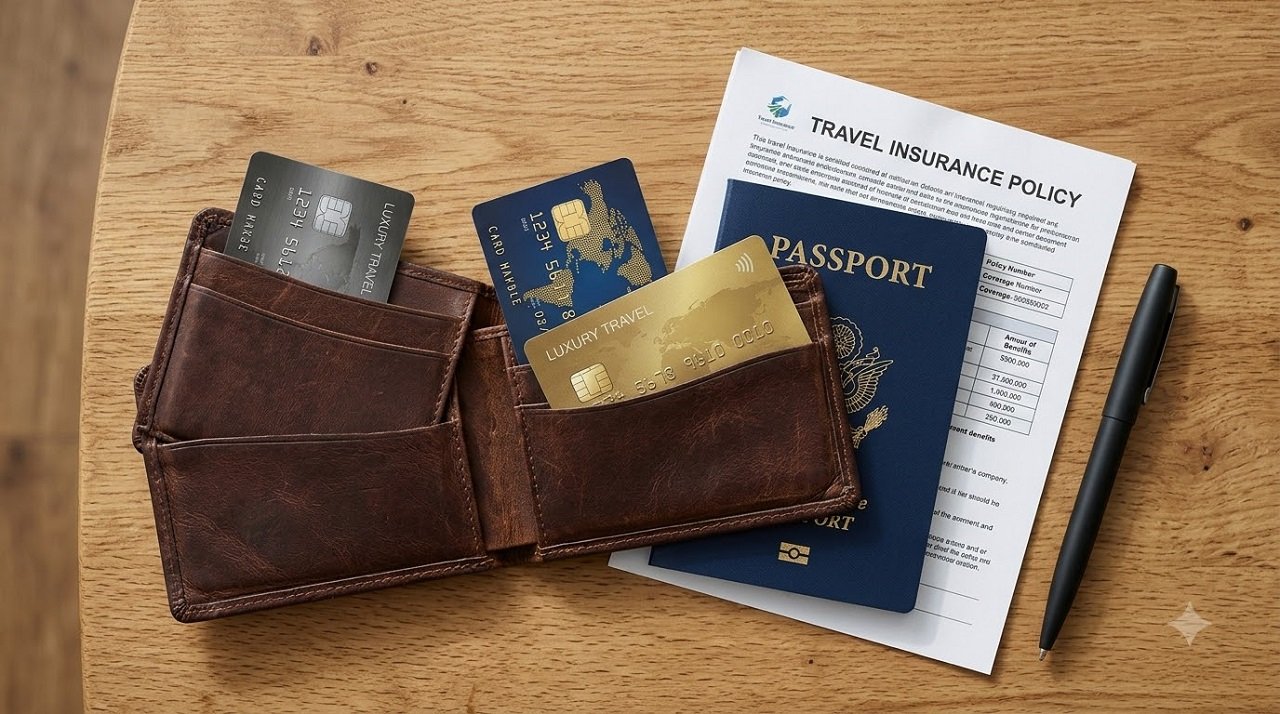
Squaremouth’s review of major travel cards found that credit card coverage is not enough for major medical expenses, high-cost trips, or medical evacuations.-54
A comparison of four popular cards shows the problem clearly:
| Benefit | Chase Sapphire Reserve | Chase Sapphire Preferred | Capital One Venture X | Amex Platinum |
|---|---|---|---|---|
| Emergency Medical | $2,500 (with $50 deductible) | None | None | None |
| Medical Evacuation | $100,000 | $100,000 | None | No limit |
Source: Squaremouth.-54
A $2,500 emergency medical limit** is negligible against the cost of a hospital stay abroad. A **$100,000 evacuation limit is better but still well below the $250,000+ that extreme international evacuations can cost.
How to Use Them Together
Credit card coverage can complement a standalone policy, particularly for rental car coverage and trip delay. But it should not be your only protection for international travel. The standard recommendation is to treat credit card benefits as a supplement, not a replacement.-54
Part 7: Pre-Existing Conditions and the Waiver
If you have any diagnosed medical condition, the pre-existing condition exclusion is the most important clause in your policy.
How the Waiver Works
The waiver removes the exclusion, so your condition is covered like any other medical issue. To qualify, you typically must:
- Buy the policy within 14 to 21 days of your first trip payment.
- Insure the full cost of your trip (100% of prepaid, non-refundable expenses).
- Be medically able to travel at the time of purchase.
Not every policy offers the waiver. Check before you buy, and check the deadline carefully — missing it by a day can disqualify you.
Why It Matters
Without the waiver, a claim related to a pre-existing condition will be denied even if the condition was stable and well-managed before the trip. This is the single most common source of claim disputes in travel insurance. The waiver is the fix, and it costs nothing beyond buying the policy early enough.
Part 8: Adventure Sports and Activity Riders
If your trip involves activities that insurers classify as hazardous, standard coverage will not protect you.
What Is Typically Excluded
Skiing, snowboarding, scuba diving, bungee jumping, paragliding, mountaineering, white-water rafting, and similar activities are excluded by default on most standard policies.
What You Need

You need either a policy that covers these activities as standard, or an adventure sports rider added to a standard policy. Some insurers offer riders covering a single activity; others cover a list of activities in one upgrade.-61
What to Check
- Whether your specific activity is named in the policy or rider.
- Whether the activity is covered only when done with a licensed operator.
- Whether injuries occurring under the influence of alcohol are excluded (they almost always are).
- Whether the activity is covered only in certain regions or conditions.
If you are skiing, diving, or trekking at altitude, this section is not optional. Buying a standard policy and assuming it will cover a ski injury is one of the most common and expensive mistakes in travel insurance.
Part 9: How to Choose a Policy
Use this checklist before you buy.
1. Decide between medical-only and comprehensive. Base it on how much non-refundable money you have at risk.
2. Check the emergency medical limit. For international travel, aim for at least $100,000, and more if you have health concerns or are traveling to a region with expensive healthcare.
3. Check the medical evacuation limit. This should be at least $250,000**, ideally **$500,000 or more. Evacuation is the benefit most likely to prevent financial catastrophe.
4. Read the exclusions first. The exclusions section tells you what the policy will not do. Read it before the inclusions.
5. Check for the pre-existing condition waiver if you have any diagnosed condition. Note the purchase deadline.
6. Check adventure sports coverage if your itinerary includes any high-risk activity.
7. Decide whether CFAR is worth the extra cost based on how much non-refundable money you have at risk and how uncertain your plans are.
8. Compare at least three quotes. Premiums vary significantly for the same trip. Use a comparison tool or broker rather than buying the first option.
9. Check the claims process. Look for 24/7 emergency assistance, direct billing arrangements with hospitals where possible, and clear documentation requirements.
10. Buy early. The pre-existing condition waiver deadline and CFAR eligibility both depend on purchasing soon after your first trip payment.
Conclusion
Travel insurance is not a scam, and it is not a magic shield. It is a contract with specific benefits, specific limits, and specific exclusions. The travelers who get value from it are the ones who read the contract before they need it.
The three numbers that matter most are the emergency medical limit, the medical evacuation limit, and the pre-existing condition waiver deadline. Get those right, check whether your activities are covered, and decide deliberately whether CFAR is worth the premium for your particular trip.
Everything else is detail — important detail, but detail.
Frequently Asked Questions
What does travel insurance actually cover?
A comprehensive policy covers emergency medical treatment, medical evacuation and repatriation, trip cancellation and interruption for covered reasons, travel delays, baggage delay and loss, and sometimes rental car damage and personal liability. Coverage limits and conditions vary by policy.
What is not covered by travel insurance?
Common exclusions include pre-existing conditions (unless you qualify for a waiver), adventure sports (unless you add a rider), self-inflicted injury or negligence, mental health treatment, cosmetic surgery, war and riots, known or foreseeable events, and changing your mind about the trip.
How much does travel insurance cost?
Comprehensive coverage typically costs 4% to 10% of your prepaid, non-refundable trip expenses, averaging about $20 to $32 per day. Medical-only coverage averages around $5 per day. Age, trip cost, trip length, and coverage limits all affect the premium.
Is credit card travel insurance enough?
Usually not for international travel. Credit cards often cover trip cancellation, delays, and rental cars, but emergency medical limits are typically very low or nonexistent. A standalone policy is recommended for medical and evacuation coverage abroad.
What is cancel for any reason coverage?
CFAR is an optional upgrade that lets you cancel for reasons standard policies exclude and still receive 50% to 75% of your prepaid, non-refundable trip costs back. It must be purchased within 14 to 21 days of your first trip payment and adds roughly 40% to 60% to your premium.
What is a pre-existing condition waiver?
It removes the exclusion for medical conditions diagnosed before you bought the policy. To qualify, you usually must buy the policy within 14 to 21 days of your first trip payment and insure the full cost of the trip.
Sources
- Squaremouth. How Much Does Travel Insurance Cost? Internal sales data, October 2025–October 2026. Average premium $307–$313 for a 15-day trip; $20 per day; comprehensive 4–10% of trip cost; medical-only $86 average; comprehensive $426 average. https://www.squaremouth.com/travel-advice/cost-for-travel-insurance
- Squaremouth. International Travel Insurance Cost: Data Report. October 2025–October 2026. Average international comprehensive $479 ($32/day); medical-only $86; comprehensive + CFAR $735; trip cost and age tables. https://www.squaremouth.com/plans/international/international-travel-insurance-cost
- Squaremouth. Cancel For Any Reason (CFAR) Travel Insurance. CFAR reimbursement 50–75%; add-on costs ~3% of trip expenses; increases premium 40–60%; purchase window 14–21 days; 80% of plans reimburse 75%. https://www.squaremouth.com/travel-insurance-benefits/cancel-for-any-reason/
- Squaremouth. Cancel For Any Reason Insurance Is Having a Moment. March 11, 2026. CFAR interest up 27%; total cost range 6–18% of trip cost; eligibility rules. https://www.squaremouth.com/press-room/cancel-for-any-reason-insurance-is-having-a-moment-in-2026-squaremouth-explains-why
- Squaremouth. Credit Card Travel Insurance: What Does It Cover & Is It Enough? Comparison of Sapphire Reserve, Sapphire Preferred, Venture X, Amex Platinum; emergency medical and evacuation limits. https://www.squaremouth.com/travel-advice/guide-credit-card-travel-insurance
- Squaremouth. Travel Insurance for Baggage Loss. Baggage loss limits $500–$5,000; delay benefits $100–$1,000; per-item sub-limits. https://www.squaremouth.com/travel-insurance-benefits/baggage-delay-loss-theft
- Policybazaar. Understanding Travel Insurance Limitations. Pre-existing conditions, high-risk activities, self-inflicted damages, mental health, negligence, change of plans, war and riots. https://www.policybazaar.com/travel-insurance/articles/understanding-travel-insurance-limitations/
- MoneyGeek. How Much Does Travel Insurance Cost? Basic plans $125 average; comprehensive $227; premium $345; medical coverage tiers; age and trip cost data. https://www.moneygeek.com/insurance/travel/how-much-does-travel-insurance-cost/
- Jettly. International Medical Flight Cost. International medical flights $40,000–$250,000; extreme cases exceed $500,000. https://website.jettly.com
- Emergency Assistance Plus. What Is Medical Repatriation: Process, Cost, and How To Pay. Repatriation costs $5,000–$500,000. https://partnerships.emergencyassistanceplus.com
- Travel Insured International. Plan benefit limits. Essential plan $200,000 evacuation; Platinum plan $1,000,000 evacuation. https://www.travelinsured.com
- Trawick International. Safe Travels International plan documents. Emergency medical evacuation up to $1,000,000. https://trawickinternational.com
- Condé Nast Traveller India. Why your travel insurance may not actually cover the holiday you booked. Adventure sports exclusions and rider requirements. https://www.cntraveller.in/story/why-your-travel-insurance-may-not-actually-cover-the-holiday-you-booked/
- Financial Express. Go for rider to cover adventure sports. Standard exclusions for rafting, skiing, scuba, paragliding, bungee jumping, mountaineering. https://www.financialexpress.com
- Lonely Planet. Everything you need to know about travel insurance. Comprehensive vs. medical-only definitions. https://www.lonelyplanet.com