This guide relies on textile mechanics and practical packing methods, not on statistics or changing regulations. How cotton, wool and synthetics behave under pressure does not change, and the folding techniques below have been used by travelers for decades.
Treat this as a set of principles. If a method works for your specific wardrobe and suitcase, use it — regardless of what any guide says.
All sources used in this guide are listed at the end.
Introduction
There are two kinds of travelers: those who unpack a shirt that looks like it was pressed that morning, and those who unpack something resembling crumpled tissue paper and spend twenty minutes trying to hang it straight.
The difference is not luck, and it is not expensive luggage. It is understanding why wrinkles form in the first place.
Clothes do not crease randomly. They crease where three things meet: pressure, moisture, and fiber tension. When a fabric is folded and compressed, the fibers are forced into a new shape. If the fabric is dry and the fibers are resilient, they bounce back when unpacked. If the fabric is damp, or the fibers are inelastic, the crease becomes permanent.
That means most anti-wrinkle advice gets it backwards. It starts with “roll instead of fold” and skips the part that actually matters: what you put in the bag, and how much air you leave around it.
This guide covers the mechanics — why some fabrics crease and others do not — then gives you the three packing methods that actually work, the one mistake most travelers make with packing cubes, and how to rescue a shirt in a hotel room without an iron.
If you are trying to fit a week’s worth of clothes into a cabin bag, our guide to carry-on packing covers volume and capsule wardrobe structure. This article is about keeping what you packed looking presentable when you arrive.
Why Clothes Crease: The Three Causes
Before choosing a method, it helps to know what you are fighting.
1. Pressure
This is the obvious one. The heavier the items stacked on top of a folded shirt, the sharper the crease.
But pressure is cumulative. A folded shirt at the bottom of a heavy suitcase is under more pressure than one at the top. This is why the packing order matters as much as the folding technique — heavy items like shoes and toiletry bags should go at the wheel end or the hinge, where they compress the least delicate items.
2. Moisture
Damp fibers hold creases. A shirt packed while still slightly warm from the dryer, or a garment stored in a humid environment, will wrinkle far more deeply than a bone-dry one.
This is also why the bathroom is the worst place to hang a jacket before packing. The humidity softens the fibers, and then you fold them under pressure.
3. Fiber Resiliency
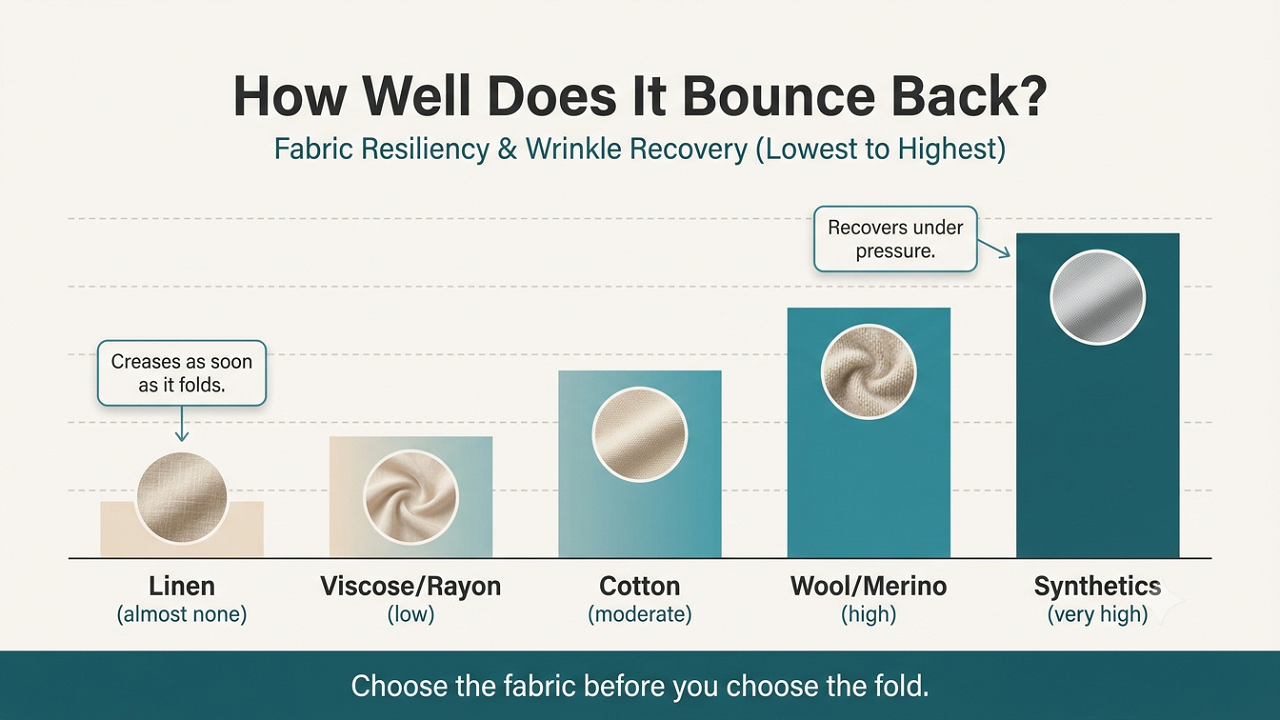
This is the factor most travelers never think about, and it determines most of the outcome.
Different fabrics respond differently to being folded:
- Linen has almost no resiliency. It creases as soon as it is folded and holds the crease. It is beautiful and entirely the wrong choice for a bag.
- Cotton has moderate resiliency. It creases under pressure but releases the crease when steamed or ironed.
- Wool (especially merino) has high natural resiliency. The fibers have a crimp that allows them to spring back to their original shape. This is why wool suits travel better than cotton ones.
- Synthetics (polyester, nylon, elastane blends) have very high resiliency. They resist creasing and recover quickly. This is why athletic wear travels well.
- Silk is unpredictable. It can travel perfectly or emerge looking like it was slept in, depending on humidity and the weave.
The practical rule: if you are choosing what to pack, favour wool and synthetics for anything that needs to look sharp. If you are packing cotton or linen, you need a method that minimises pressure — not just a clever fold.
What to Pack If You Care About Creases
You can fold perfectly and still arrive with a creased shirt if the fabric is wrong. This is a wardrobe decision, not a packing decision.
The “Resilient” Tier
These garments bounce back with minimal effort:
- Merino wool — t-shirts, sweaters, trousers. The gold standard for travel. It resists creasing, regulates temperature, and resists odour, meaning you can wear it more than once.
- Synthetic blends — anything with polyester, nylon, or a small amount of elastane. They hold their shape under compression.
- Technical fabrics — travel-specific trousers and shirts designed with high twist yarns that resist creasing.
The “Fragile” Tier
These require more care:
- Cotton poplin shirts — the classic business shirt. They will crease, but they also respond well to steam.
- Linen — will crease. There is no method that prevents this. Embrace it or leave it home.
- Viscose and rayon — can crease deeply and are difficult to recover without a proper iron.
- Wool suits — resilient but heavy. Best packed using the bundle method (below).
The One Rule That Saves Everything
Never pack a garment that is damp, warm from the dryer, or has been sitting in a humid bathroom. Dry fibers crease less. It really is that simple.
If you are building a capsule wardrobe and want to know which fabrics work for which climates, our guide to one-bag packing covers how to build a colour palette around resilient fabrics.
The Three Methods That Actually Work
There is no single “best” way to fold everything. There are three methods, and each is suited to a different garment.
Method 1: The Bundle Method (Best for Suits, Dresses, and Mixed Bags)
This is the method used by flight attendants and professional packers. It works by distributing the fold across the entire bag, so no single point of the garment is sharply bent.
How it works:
- Start with your largest, most delicate item — a suit jacket, a dress, or a pair of trousers.
- Lay it flat in the bottom of the suitcase, with the sleeves or hems hanging over the edges.
- Layer smaller, softer items (t-shirts, underwear, socks) in the centre of the garment, building a core.
- Fold the hanging edges of the large garment over the core, one at a time, wrapping it like a parcel.
- Repeat with the next largest item, wrapping it around the first.
Why it works: The outer garment is never sharply folded. It curves around a soft core, which means the fold is gradual rather than a hard crease. The bundle acts as its own cushioning.
Best for: Trips where you need one or two formal items and don’t want to use a garment bag.
Method 2: The Tissue Paper Method (Best for Button-Down Shirts)
This is the method used by retail stores to keep shirts looking pressed on the shelf. It is slightly fiddly, but it is the most effective way to pack a dress shirt without a crease.
How it works:
- Lay the shirt face down and button it up (this keeps the front panels aligned).
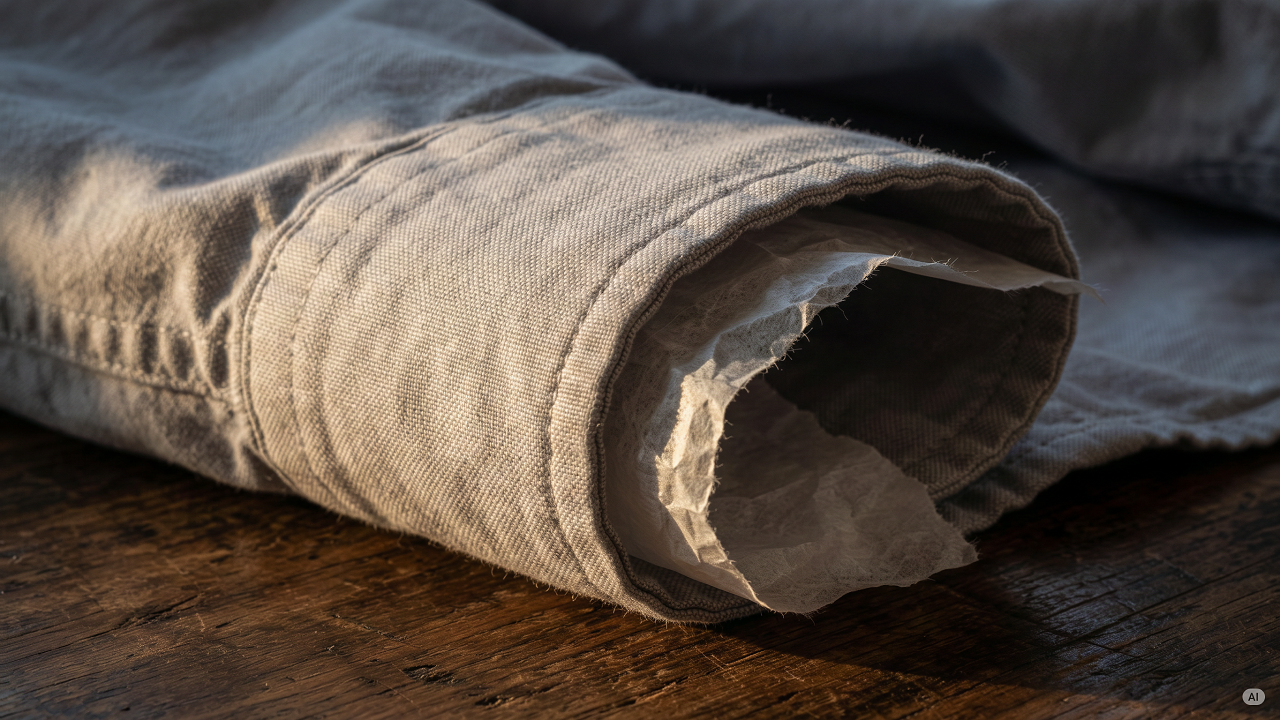
- Lay a sheet of tissue paper (or thin packing paper) flat on the back of the shirt.
- Fold the sleeves in towards the centre, using the tissue paper to cover the fold.
- Fold the shirt in half or thirds, placing tissue paper at each fold line.
- Place the folded shirt flat at the top of the bag, not the bottom.
Why it works: The tissue paper acts as a buffer at the fold. It prevents the fabric from creasing against itself and distributes the pressure of the fold.
Best for: One or two formal shirts on a business trip.
Method 3: The Ranger Roll (Best for Casual Clothes and Space Saving)
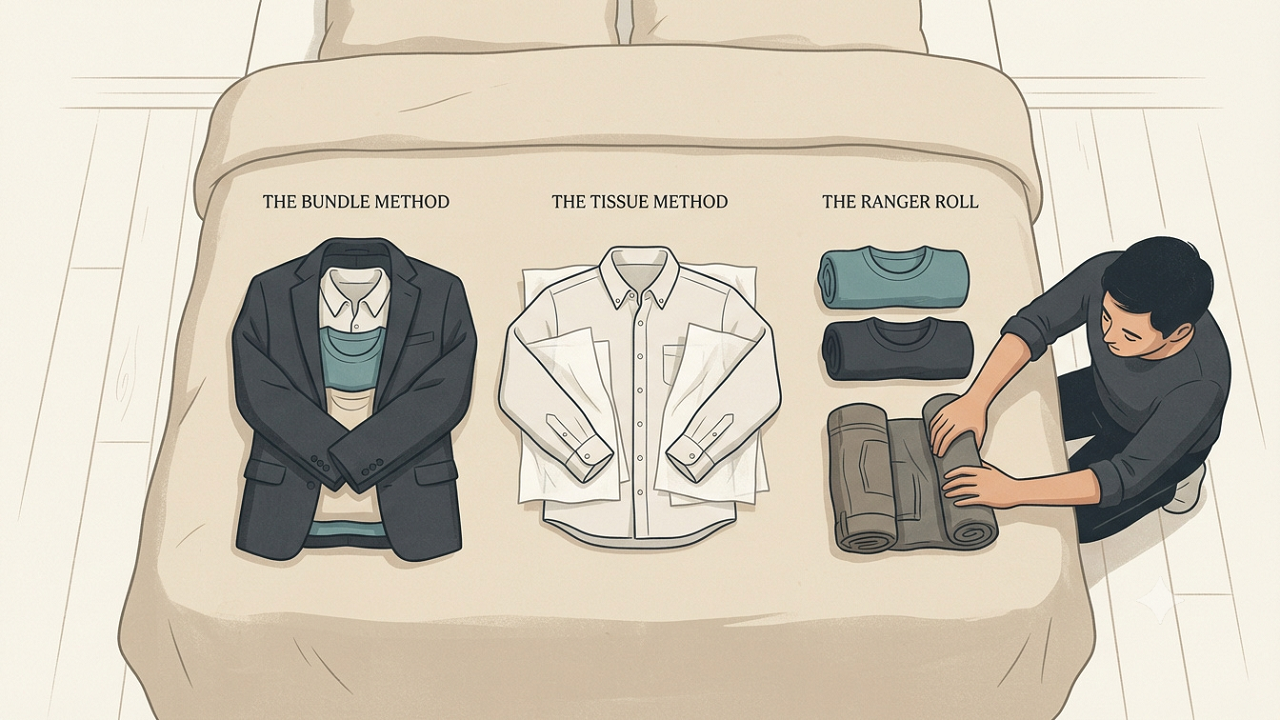
This is the method popularised by military personnel, and it is the most efficient way to pack t-shirts, underwear, and casual trousers.
How it works:
- Lay the garment flat, face down.
- Fold the bottom third up, and the sleeves inwards.
- Starting from the top (the collar end), roll tightly towards the bottom.
- Use the folded-up bottom hem to tuck the roll in on itself, so it stays tight.
Why it works: Rolling prevents sharp fold lines and creates a compact, cylindrical bundle that fits into gaps in the bag. It does not prevent all creasing in cotton, but it minimizes hard edges and saves a significant amount of space.
Best for: Casual clothing, gym wear, and anything made of a resilient fabric.
The One Thing That Doesn’t Work
Folding clothes flat and stacking them like a filing cabinet. This is how most people pack, and it is the worst method for wrinkles because every item sits under the full weight of everything above it. It also means you have to unpack the entire bag to reach the item at the bottom.
If you are currently a flat-folder, switching to rolling or bundling will solve most of your problems immediately.
The Packing Cube Mistake
Packing cubes are useful for organization. Used badly, they actively cause wrinkles.
Why Compression Causes Creases
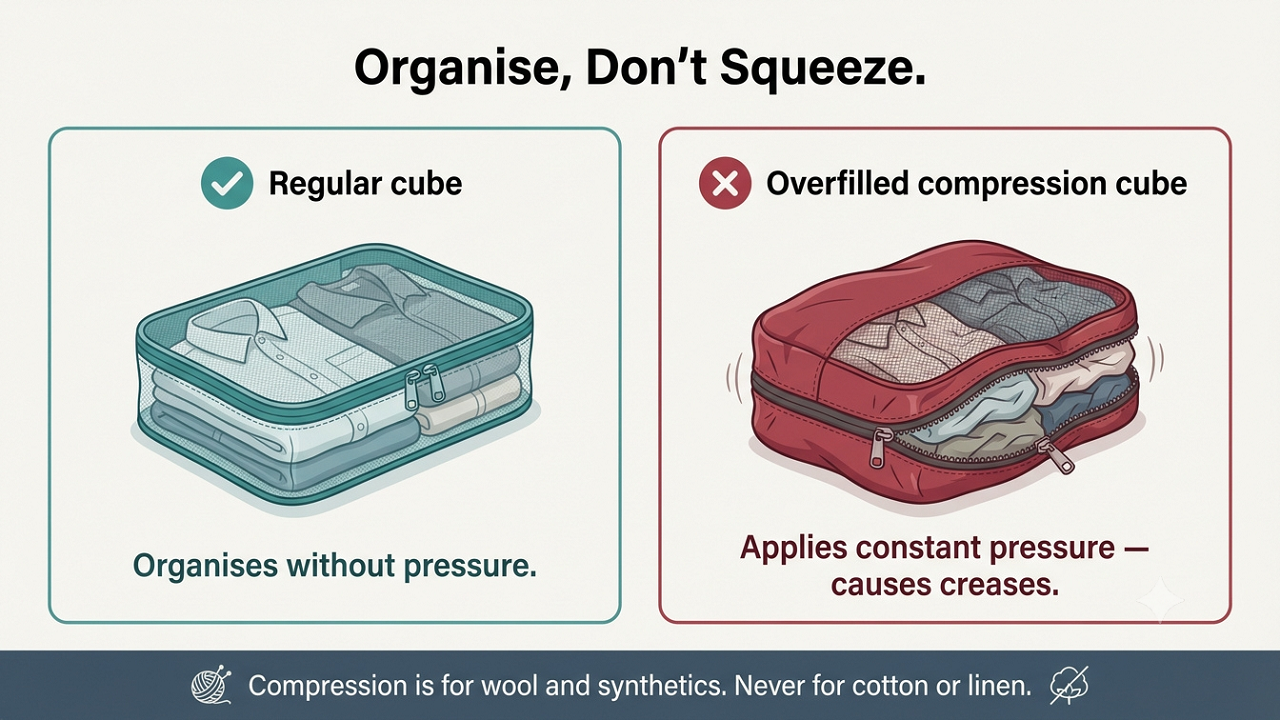
A compression packing cube works by squeezing the air out and reducing the volume. That is excellent for saving space. It is terrible for fabric.
The compression forces the clothes tightly against each other, creating sharp folds and sustained pressure. If you put a cotton shirt in a compression cube and zip it down, you are essentially pressing it.
How to Use Cubes Without Causing Wrinkles
- Use compression cubes for resilient fabrics only. Wool, synthetics, and activewear survive compression well. Cotton and linen do not.
- Use regular (non-compression) cubes for delicate items. They organize without squeezing.
- Do not overfill. A cube that is stuffed to capacity is applying pressure. A cube that is loosely filled is protecting the contents.
- Pack heavy items outside the cubes. Shoes and toiletry bags go in the gaps between cubes, not on top of them.
The Access Cube
One useful habit: keep a single, loosely packed cube at the top of the bag with your first-night essentials — a change of clothes, a toothbrush, and a phone charger. It means you do not have to unpack everything on arrival just to find a clean t-shirt.
If you are looking for bag recommendations that work well with cubes, our guide to travel backpacks for men covers capacity and access, and our guide to carry-on packing covers volume limits.
How to Rescue Creased Clothes on Arrival
Even with the best method, something will crease. Here is what actually works, ranked by effectiveness.
1. Shower Steam (The Hotel Room Fix)
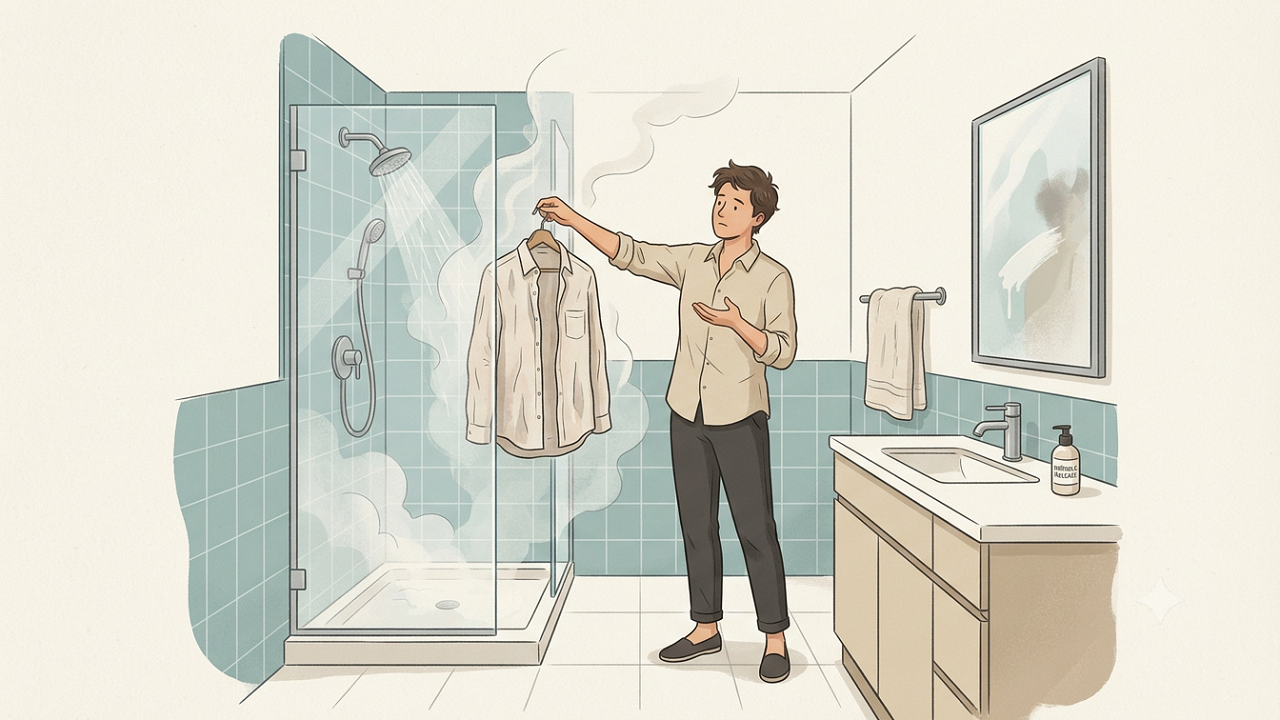
Hang the garment in the bathroom, close the door and window, and run the shower on hot for five to ten minutes. The steam relaxes the fibers.
Important: do not let the garment get wet. Hang it away from the direct spray. The goal is humidity, not water.
This works extremely well for cotton and wool. It does very little for linen.
2. Wrinkle-Release Spray
A spray bottle of water with a small amount of fabric conditioner (or a commercial wrinkle-release spray) works by relaxing the fibers. Spray lightly, smooth with your hand, and hang to dry.
It is not as effective as steam, but it is fast and works well on synthetics.
3. The Hairdryer Method
Hold the hairdryer on a warm setting about 15 centimetres from the fabric and smooth the crease with your other hand. Keep the dryer moving to avoid scorching.
This works better than it sounds, particularly on cotton. It is slower than steaming but useful for a single shirt.
4. The Heavy-Object Method
For a truly stubborn crease, lay the garment flat on the bed, smooth it out, and place something heavy and flat on top (a stack of books, a suitcase, or a heavy towel). Leave it for an hour or two. The pressure will flatten the crease.
What Not to Do
Do not iron a wool garment directly. It will shine or scorch. Use a damp cloth between the iron and the fabric, or use the steam setting only.
Do not use a hotel kettle to steam clothes. The steam is too concentrated and too hot, and the spout can spit water. It is a reliable way to damage the fabric.
The Pre-Packing Checklist
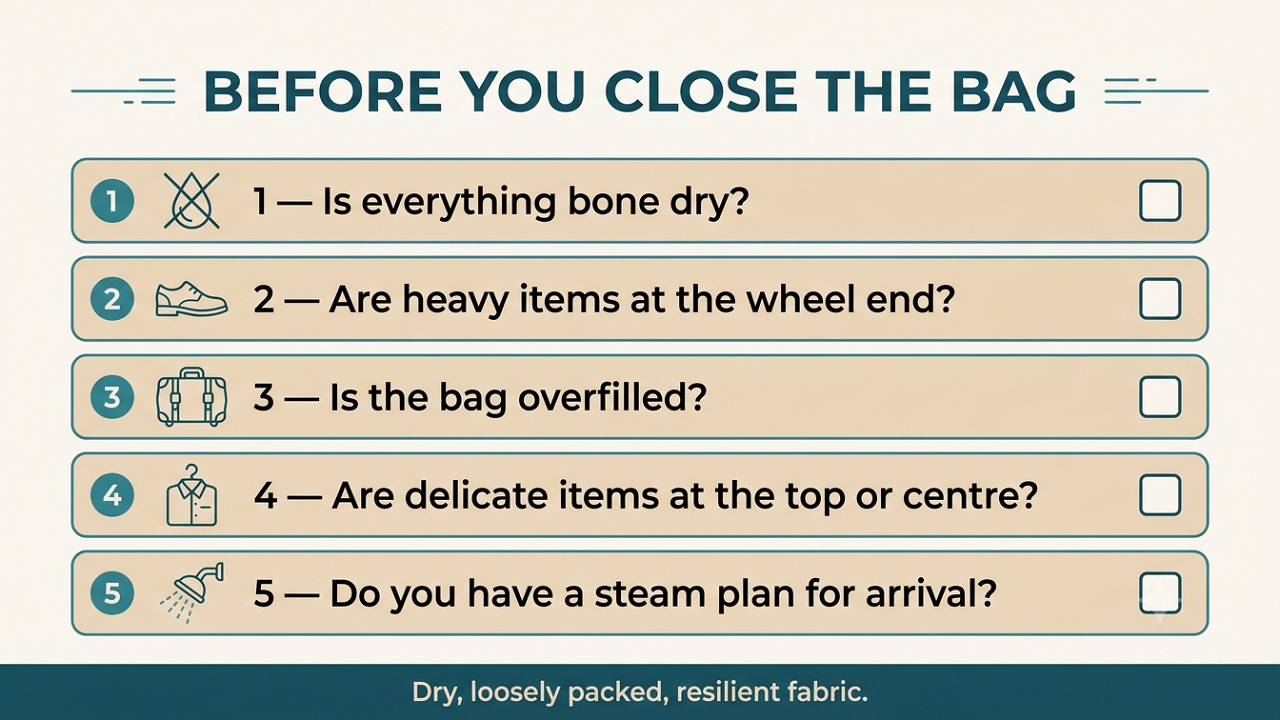
Before you close the bag:
- Is everything bone dry? Any dampness will multiply the creasing.
- Are the heaviest items at the bottom or the wheel end? Not on top of delicate garments.
- Is the bag overfilled? A bag that is bursting at the seams is applying constant pressure to everything inside. Leave a small gap at the top.
- Are delicate items at the top or centre? Not against the zip or the hard shell.
- Do you have a steam plan for arrival? Know whether your hotel room has a shower (almost always) or an iron (sometimes).
If you are packing for a trip where formal clothing is required, our guide to trip budgeting is a reminder that paying for hotel laundry or pressing services is often cheaper than buying a new shirt on arrival.
Conclusion
Wrinkles are not a packing mystery. They are the predictable result of pressure on inelastic fibers under moisture.
Three things resolve them:
Choose the fabric first. A merino shirt will arrive looking better than a cotton one, regardless of how you fold it. If you care about creases, pack wool and synthetics and leave the linen at home.
Match the method to the garment. Bundle the suit, use tissue paper for the dress shirt, ranger roll the casual clothes. Do not flat-stack.
Do not over-compress. A loosely packed bag creases less than one that is squeezed shut. Compression cubes are for resilient fabrics, not for everything.
If you remember one rule, make it this: dry, loosely packed, resilient fabric. Every other technique is a detail on top of those three.
If you are building a one-bag kit and want to know how many garments you actually need, our guide to carry-on packing covers the capsule wardrobe formula. If you are travelling somewhere with formal requirements — a wedding, a business meeting, a cruise — the essential travel tips for novice explorers covers the wider preparation.
Frequently Asked Questions
What is the best way to pack clothes without wrinkling them?
Match the method to the fabric and garment. Use the bundle method for suits and dresses, tissue paper for button-down shirts, and the ranger roll for casual clothes. Most importantly, pack dry garments made from resilient fabrics like merino wool or synthetics, and do not overfill the bag.
What fabrics don’t wrinkle when traveling?
Wool (especially merino) and synthetics (polyester, nylon, elastane blends) have the highest resiliency and resist creasing. Cotton has moderate resiliency and will crease but can be steamed out. Linen and viscose crease easily and are difficult to recover without an iron.
Does rolling clothes cause less wrinkles than folding?
Rolling prevents sharp fold lines and saves space, which makes it better than flat-stacking. However, rolling still involves some compression. For formal garments, the bundle method or tissue paper folding is more effective at preventing creases.
How do you pack a suit in a carry-on?
Use the bundle method. Lay the jacket face down with the sleeves hanging over the edge of the bag, build a soft core of smaller clothes in the centre, then fold the sleeves and the bottom of the jacket over the core. The jacket curves around the soft centre rather than being sharply folded.
Do packing cubes cause wrinkles?
Regular packing cubes organize without causing creases. Compression cubes squeeze the air out, which applies pressure to the fabrics inside and can cause sharp creases — especially in cotton and linen. Use compression cubes only for resilient fabrics.
How do I get wrinkles out of clothes in a hotel without an iron?
Hang the garment in the bathroom and run a hot shower for five to ten minutes with the door closed. The steam relaxes the fibers. Alternatively, use a wrinkle-release spray, a hairdryer on a warm setting, or place a heavy flat object on the garment for an hour or two.
Sources
Note: This guide relies on textile mechanics and established packing methods rather than on external statistics. The sources below cover the fabric behaviour and techniques referenced.
- Woolmark. Wool Fibre Properties, Facts & Benefits. “At microscopic level, each Merino wool fibre is like a coiled spring that returns to its natural shape after being bent. This gives Merino wool garments a natural resistance to wrinkles.”
https://www.woolmark.com/fibre/ - Qantas Travel Insider. To roll or not to roll? The packing question, answered. Published 18 August 2026. “The no-ironing factor is important to me; I put a scarf or wrap between my garments so they don’t crease.”
https://www.qantas.com/travelinsider/en/travel-tips/hacks/is-it-better-to-roll-or-fold-when-packing-your-suitcase - OneBag.com (Doug Dyment). Packing Clothes. “The common practice of individually folding items of clothing, then stacking them atop one another… is just about the worst thing you can do from a packing perspective.” The bundle wrapping method avoids the creases and wrinkles you get from folding or rolling.
https://www.onebag.com/pack.html - Textile Exchange. Wool. Published 21 September 2022. “It’s natural, breathable, and resilient… Wool is also odor- and wrinkle-resistant, which means that woolen clothing doesn’t need to be washed as often as other fiber types do.”
https://textileexchange.org/wool/