All figures and dosing in this guide come from published guidance current in 2026: the CDC Yellow Book, the UK National Travel Health Network and Centre, the UIAA Medical Commission, and peer-reviewed reviews. Clinical guidelines are revised periodically.
If you are reading this in a later year, treat the principles as still correct — ascend slowly, never climb with symptoms, descend if it gets worse. But confirm medication and dosing with a clinician before you travel.
This guide is general information, not medical advice. It cannot assess your health, your itinerary, or your risk. Talk to a travel clinic before a high-altitude trip, and in an emergency follow the advice of the treating doctor.
All sources used in this guide are listed at the end.
Introduction
Altitude sickness is unusual among travel illnesses because the cause is entirely predictable.
It is not a virus you catch or a meal you regret. It is what happens when you go up faster than your body can adapt — and the speed of ascent is the one variable almost entirely within your control.
That is why the incidence figures vary so wildly between studies. The same mountain produces very different illness rates depending on how people got there.
A meta-analysis of 12 studies covering 11,021 people ascending to 19 different altitudes between 2,200 and 4,559 metres found that the rate of acute mountain sickness rose 4.5 times more steeply with air travel than with slower ascent on foot, by car or a mix. Where people flew to altitude, studies reported illness rates of 50 to 100 per cent at heights between 3,651 and 4,559 metres, averaging 60 per cent on arrival at about 4,163 metres.
The UIAA Medical Commission puts the broader figure plainly: depending on the ascent profile, up to more than 70 per cent of mountaineers may suffer symptoms of acute mountain sickness.
Yet recent data from Nepal is more reassuring than those numbers suggest. A 2022 survey of trekkers at Lobuje (4,940 m) found acute mountain sickness in 23 per cent, with moderate cases at 4 per cent. At Manang (3,519 m), the figures were 15 per cent and 3 per cent. People following sensible itineraries on well-trodden routes get ill far less often than people flown in and pushed up quickly.
This guide covers what is actually happening in your body, the ascent rate that published guidance recommends, how to tell mild illness from the two conditions that kill, what the medication evidence shows, and the single rule that prevents almost every death.
What Is Actually Happening
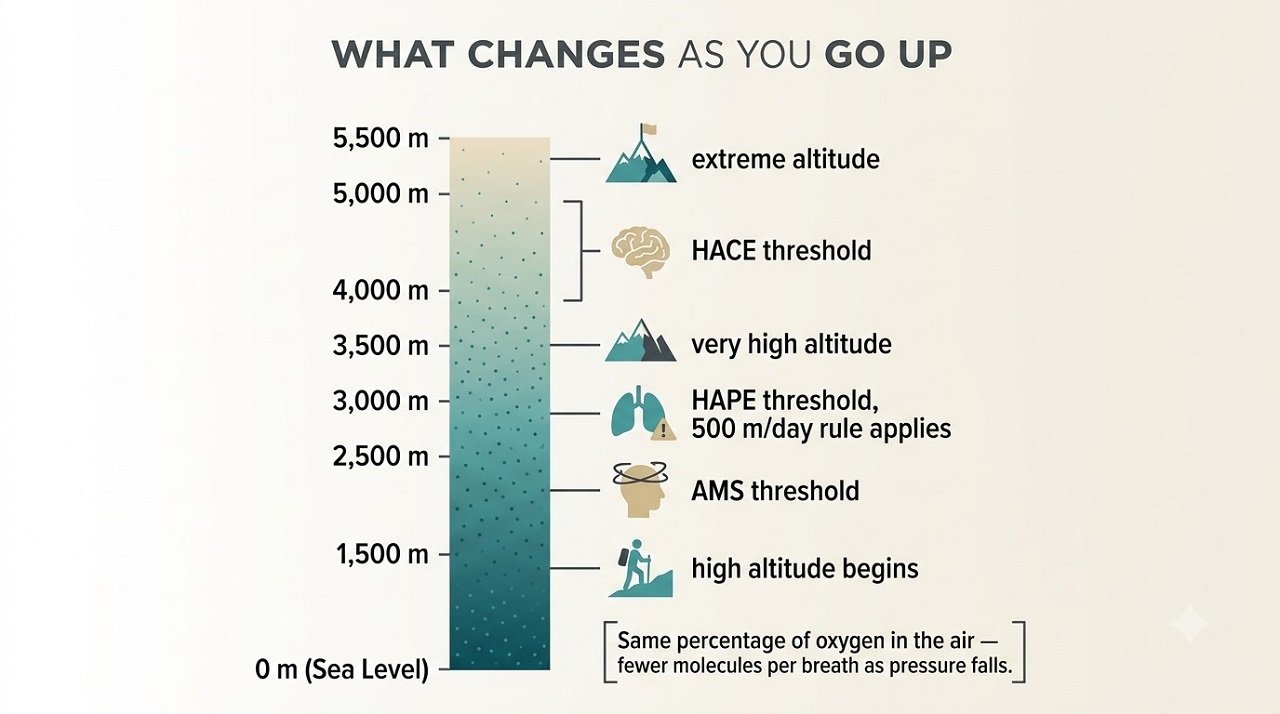
At altitude, the air still contains the same proportion of oxygen. What falls is the barometric pressure, which means each breath delivers fewer oxygen molecules.
Your body responds by breathing faster and by gradually adjusting its blood chemistry to carry oxygen more efficiently. That adjustment is acclimatisation, and it takes days, not hours.
The UK National Travel Health Network and Centre describes the mechanism directly: if ascent is too swift, acclimatisation may not occur rapidly enough, and altitude illness may follow. It defines high altitude as above 1,500 m, very high as 3,500 to 5,500 m, and extreme as above 5,500 m.
The practical consequence is that the illness is a function of how fast you gain height, not of how fit you are. Being a strong runner does not protect you. In some studies, younger people and women were affected more frequently than older individuals and men.
If you are trekking alone and there is no one to notice you deteriorating, our guide to safe solo travel covers the check-in arrangements worth having in place.
The Ascent Rate That Published Guidance Agrees On
This is the part of the article that prevents most cases, and it is unusually consistent across sources.
The UK National Travel Health Network and Centre advises:
- Avoid travelling from below 1,200 m to above 3,500 m in a single day.
- Above 3,000 m, do not increase your sleeping elevation by more than 500 m per day.
- Take a rest day at the same altitude every three or four days.
The CDC adds a second threshold: avoid going directly from low altitude — 1,200 m or below — to a sleeping altitude of 2,750 m or more in one day.
The logic is that it is your sleeping altitude that matters most. You can walk high during the day and return to sleep lower, and that is a well-established tactic. What you cannot do is repeatedly sleep higher than your body has adapted to.
Why Flying In Is the Riskiest Start
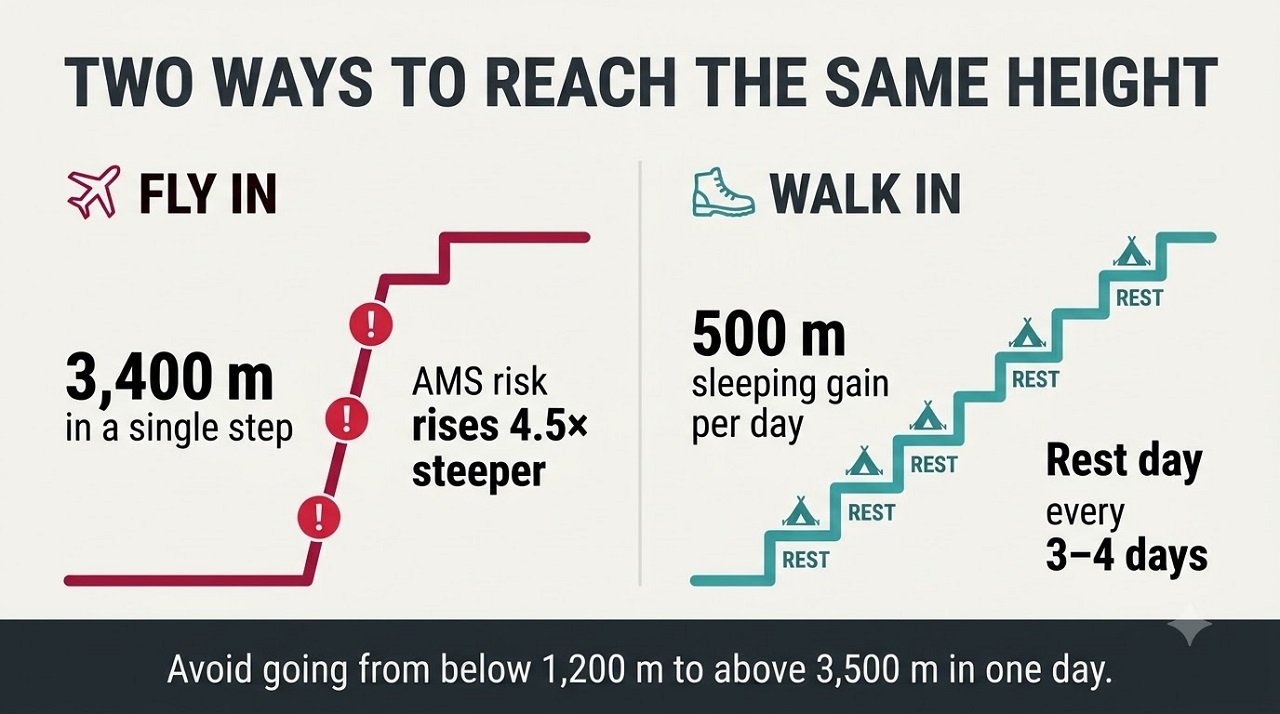
The meta-analysis finding is the key one here. Air travel to altitude produced a 4.5-fold steeper rise in illness rates than slower ascent.
That matters for destinations reached by plane rather than on foot: Cusco for Machu Picchu, Lhasa, La Paz, Bogotá, Addis Ababa, Quito, and Lukla for Everest region treks.
If you are flying in, the guidance is not to pretend you walked. It is to build in rest days before or after the big gain, and to keep the average ascent rate across the trip below 500 m per day — which is exactly what UK guidance recommends for people who cannot ascend gradually.
If your trip budget is tight and you are tempted to compress the itinerary, our guide to building a trip budget from scratch covers why the pre-trip admin and insurance lines should not be the ones you cut.
Recognising What You Have
There are three conditions, and the difference between them is the difference between an uncomfortable night and a fatality.
Acute Mountain Sickness
The standard definition comes from the Lake Louise consensus, which the UIAA has incorporated into its current guidance.
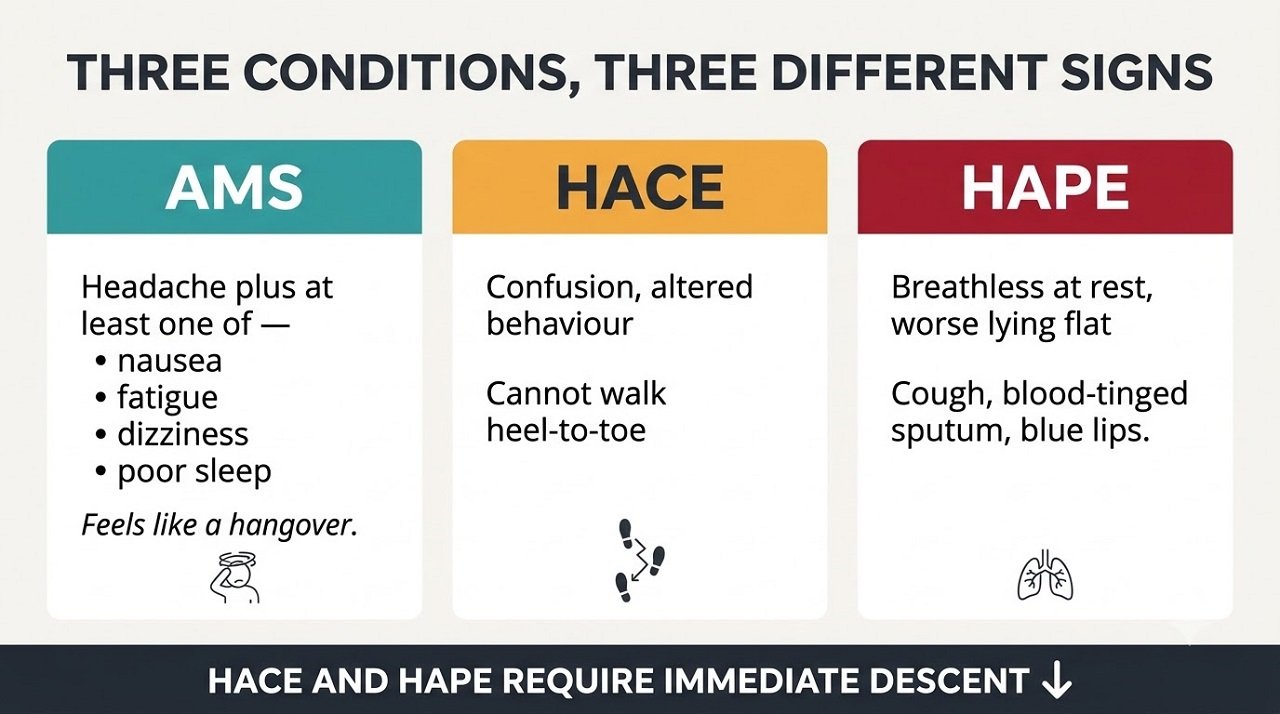
In the setting of a recent gain in altitude, acute mountain sickness is the presence of headache plus at least one of:
- Gastrointestinal symptoms — loss of appetite, nausea or vomiting
- Fatigue or weakness
- Dizziness or lightheadedness
- Difficulty sleeping
The CDC describes the early symptoms more colloquially, and usefully: they are the same as a hangover.
That framing is helpful because it tells you what to do about it. If you feel hungover and you have not been drinking, you have altitude illness until proven otherwise.
High-Altitude Cerebral Oedema
HACE is what the Lake Louise consensus calls “end-stage” or severe acute mountain sickness.
What distinguishes it is brain involvement:
- A change in mental status — confusion, drowsiness, unusual behaviour
- Ataxia — difficulty with heel-to-toe walking, unsteadiness, loss of coordination
UK guidance lists confusion, altered consciousness and incoordination as the defining features.
Ataxia is the sign to test for on a trek. Ask the person to walk in a straight line, heel to toe. If they cannot, it is HACE until proven otherwise, and it is an emergency.
High-Altitude Pulmonary Oedema
HAPE is fluid in the lungs, and it can develop without much warning.
What to look for:
- Breathlessness that is worse lying flat
- A cough, initially dry and later wet
- Chest tightness
- Blood-tinged sputum
- Blue or grey lips and nail beds
UK guidance describes it as increasing breathlessness at rest, orthopnoea, cough and blood-streaked sputum.
The Altitudes Where Each Tends to Appear
The UIAA gives approximate thresholds:
- Acute mountain sickness: from about 2,500 m
- HAPE: from about 3,000 m
- HACE: from about 4,000 to 5,000 m
with a note that cases below these altitudes are rare but possible.
The Lake Louise Score
The score is used mainly for research and for grading severity. In clinical practice, the diagnosis is made on the pattern of symptoms rather than the number.
That distinction matters because travellers sometimes try to self-score and talk themselves out of a diagnosis. The consensus definition — headache plus one other symptom after a recent gain in altitude — is the practical test.
Medication: What the Evidence Supports
This section matters because altitude medication is widely discussed and frequently misunderstood.
Acetazolamide Is First-Line
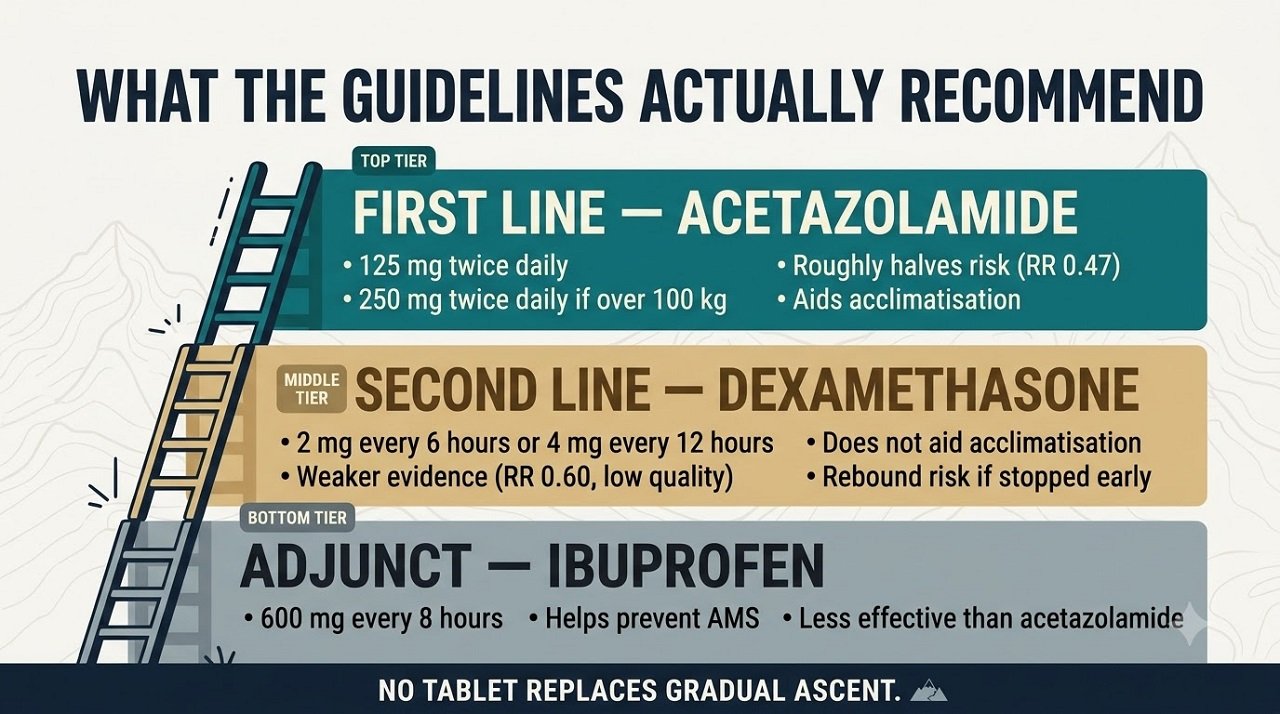
Acetazolamide — sold as Diamox — is recommended as the first-line medication for prevention across both the Wilderness Medical Society and UIAA guidelines.
The evidence is reasonably strong. A 2017 Cochrane review found moderate quality evidence that acetazolamide reduces the risk of acute mountain sickness, with a risk ratio of 0.47 (95% CI 0.39 to 0.56) — roughly halving the risk.
How it works: it induces a bicarbonate diuresis and mild metabolic acidosis, which counteracts the respiratory alkalosis of altitude and stimulates ventilation, raising blood oxygen, especially at night. The CDC notes that with acetazolamide, the ventilatory acclimatisation that normally takes 3 to 5 days takes only one day.
Dosing, per the CDC:
| Purpose | Dose |
|---|---|
| Prevention | 125 mg twice a day (250 mg twice a day if over 100 kg) |
| Treatment | 250 mg twice a day |
starting the day before ascent and continuing for the first two days at altitude, longer if you keep climbing.
UK guidance gives the same prophylactic dose — 125 mg twice daily, started one day before ascent and continued for at least two days after reaching the highest altitude.
For higher-risk ascent profiles, guidance suggests considering 250 mg twice a day.
Practical points:
- Start a trial dose at home before you travel, to check for side effects.
- Common side effects include increased urination and tingling in the hands and feet.
- It makes carbonated drinks taste odd — a harmless but memorable effect.
- It is unlicensed for this purpose in the UK, so it usually comes from a travel clinic or a private prescription rather than a routine NHS one.
- If you are carrying it across borders, our guide to travelling with prescription medication covers the documentation you need.
Dexamethasone Is Second-Line for Prevention
Dexamethasone is a steroid. It is effective for preventing and treating acute mountain sickness and HACE, and may help prevent HAPE — but the evidence for prevention is weaker.
The same Cochrane review found a risk ratio of 0.60 for dexamethasone, with low quality evidence.
Why it is not first choice: unlike acetazolamide, it does not aid acclimatisation. It masks the illness rather than helping you adapt, and stopping it at altitude before acclimatisation can cause a rebound.
The CDC puts it directly: acetazolamide is preferable to prevent illness while ascending, and dexamethasone generally should be reserved for treatment, usually alongside descent.
Ibuprofen Has Some Evidence
The CDC notes that ibuprofen 600 mg every eight hours helps prevent acute mountain sickness, though not quite as effectively as acetazolamide.
It is over the counter, cheap and well tolerated. That makes it a reasonable option for people who cannot take acetazolamide, with the honest caveat that it is the weaker of the two.
What Is Not Recommended
Alcohol and opiates should not be used to help you sleep at altitude, because they depress breathing.
If you need something for sleep, the CDC notes that short-acting options such as zolpidem 5 mg or zaleplon 5 mg are generally recognised as safe, provided at least eight hours pass before you do anything requiring alertness.
Medication Does Not Replace Gradual Ascent
UK guidance is explicit: preventative medication is not a substitute for gradual ascent, and is not necessary in low-risk situations at all.
The tablets buy you margin. They do not buy you the right to skip the rest day.
The Descent Decision
This is the part where people get hurt, because descent feels like failure and costs money.
The Three Rules
The CDC reduces the prevention of severe illness and death to three rules:
- Know the early symptoms — they are the same as a hangover — and be willing to admit they are present.
- Never ascend to sleep at a higher altitude when experiencing symptoms, no matter how minor they seem.
- Descend if symptoms get worse despite rest or treatment at the same elevation.
The CDC also states the encouraging corollary: because onset and progression are slow and predictable, there is no reason for anyone to die from altitude illness unless they are trapped by weather or geography where descent is impossible.
The Descent Sequence
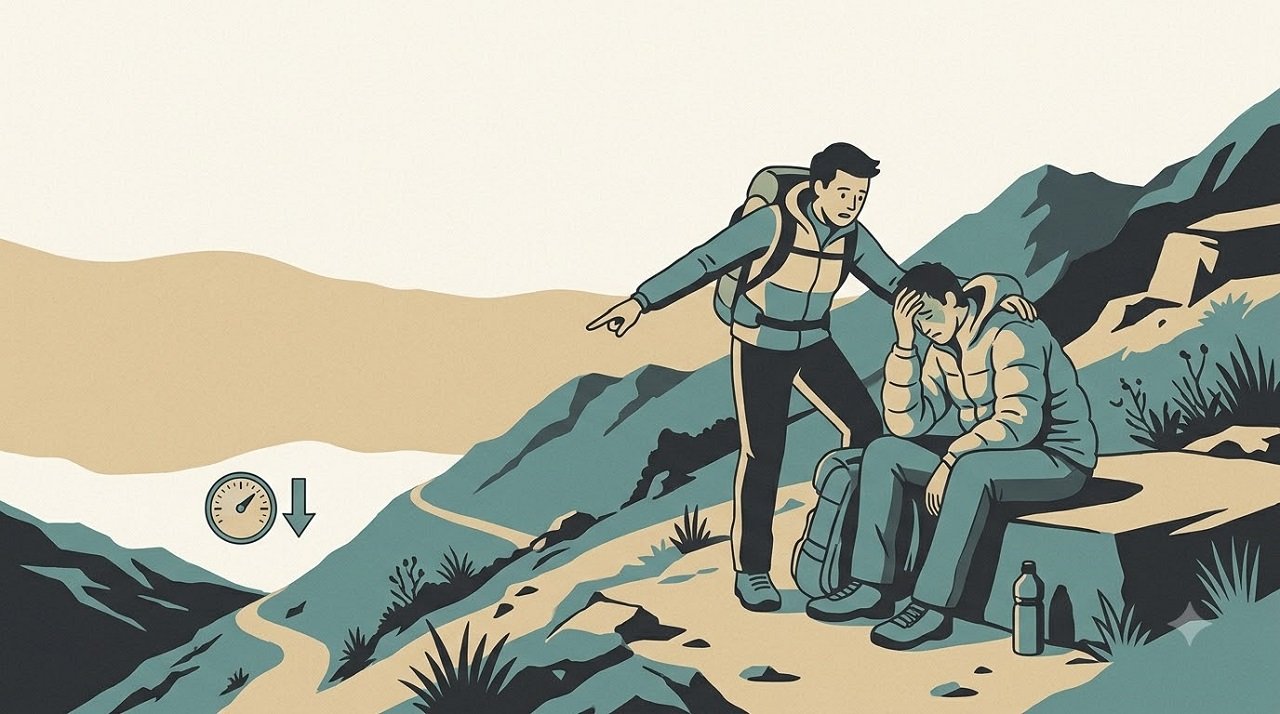
If symptoms are mild, the first move is to stop ascending and rest at the same altitude. UK guidance says symptoms usually settle within one to three days, and you can continue once they have resolved.
If they worsen or do not improve, descend. UK guidance suggests going 300 to 1,000 metres lower — enough to make a real difference, not a token drop.
The Signs That Mean Immediate Evacuation
UK guidance lists the red flags requiring urgent medical help:
- Feeling very unwell with altitude symptoms
- Confusion
- Problems with balance or coordination
- Hallucinations
- Shortness of breath at rest
- Coughing up frothy or bloody sputum
- Blue or grey lips, tongue or nails
- Being very sleepy or difficult to wake
In any of those cases, go to a lower altitude straight away.
Never Leave Someone Alone
UK guidance includes a line worth repeating: never leave an individual with altitude illness alone. People with HACE can deteriorate and lose the judgment to descend. Someone else has to make that decision for them.
If You Cannot Descend
Where weather or terrain blocks descent, the CDC notes that a portable hyperbaric bag such as a Gamow bag can help. It mimics a descent of roughly 1,500 to 1,800 m and weighs about 6.5 kg packed.
That is expedition equipment, not day-hike equipment. But if you are booking a trek into a remote area, it is worth asking whether your operator carries one — and whether your insurance would cover the evacuation if they do not.
On insurance specifically, UK guidance is direct: the policy should cover the itinerary and activities, the maximum altitude should be disclosed, and helicopter evacuation should be included. Our guide to what travel insurance actually covers explains why evacuation limits matter more than the headline medical figure.
Who Is at Higher Risk
Some risk factors are well established, and a few are counterintuitive.
Previous Altitude Illness
A previous history of acute mountain sickness, HACE or HAPE is listed by the UIAA as a risk factor. This is the strongest single predictor available to you, and it is worth knowing before you book.
Age and HAPE
Interestingly, the risk profile differs by condition. The UIAA notes that people over 65 showed a three-fold higher risk of HAPE — but no such increased risk was found for acute mountain sickness or HACE.
Speed of Ascent
Rapid ascent is the dominant factor, and it appears in every source. The UIAA lists inadequate altitude profile, rapid ascent by air or vehicle, and “aggressive” hiking profiles as the leading risk factors.
Dehydration and Ignoring Symptoms
Both are listed explicitly. Neither is exotic. Both are common on a long trek day.
Underlying Conditions
The CDC divides pre-existing conditions into three categories: no extra risk, caution required, and contraindications.
Well-controlled asthma, controlled hypertension, diabetes, mild to moderate sleep apnoea, low-risk pregnancy and controlled seizure disorders sit in the low-risk group. Unstable angina, severe COPD, decompensated heart failure, sickle cell anaemia, poorly controlled arrhythmias and high-risk pregnancy sit in the contraindicated group.
Two specifics worth knowing:
- Pregnancy: the CDC suggests pregnant women should not stay at sleeping altitudes above 3,050 m.
- Sleep apnoea: those with severe OSA should be advised to avoid high-altitude travel unless they receive supplemental oxygen alongside CPAP.
Children
Children and adolescents are listed in the no extra risk category for ascent. The UIAA has a separate standard for children, which is worth checking if you are travelling with them.
The Fitness Myth
Nothing in the guidance suggests that being fit protects you. The meta-analysis found younger people and women affected more frequently in the studies it reviewed. Fitness affects how well you perform at altitude, not whether your body acclimatises.
If you have a pre-existing condition and are planning a high-altitude trip, a pre-travel appointment is the place to raise it. Our guide to travel vaccinations and pre-trip health appointments covers what that consultation typically involves.
What to Arrange Before You Go
A practical checklist, based on the guidance above.
Six to Eight Weeks Before
- Book a travel clinic appointment. Raise any cardiac, respiratory or neurological condition, and any previous altitude illness.
- Ask about acetazolamide, including a trial dose before you travel.
- Check your insurance. Confirm the maximum altitude is covered and that helicopter evacuation is included.
- Look at your itinerary’s ascent profile. If it flies you to 3,400 m and walks you up the next day, that is the risk factor to address before booking, not after.
What to Pack
- Acetazolamide, if prescribed, in original packaging with the prescription
- Ibuprofen or paracetamol for headache
- A copy of your insurance policy with the emergency assistance number
- Your itinerary with sleeping altitudes written down, so you can check your own ascent rate
- A pulse oximeter, if you want an objective reading — useful, but not a substitute for symptoms
If you are packing light and want the medical kit to stay accessible rather than buried, the carry-on packing system covers the pouch arrangement.
On the Trip
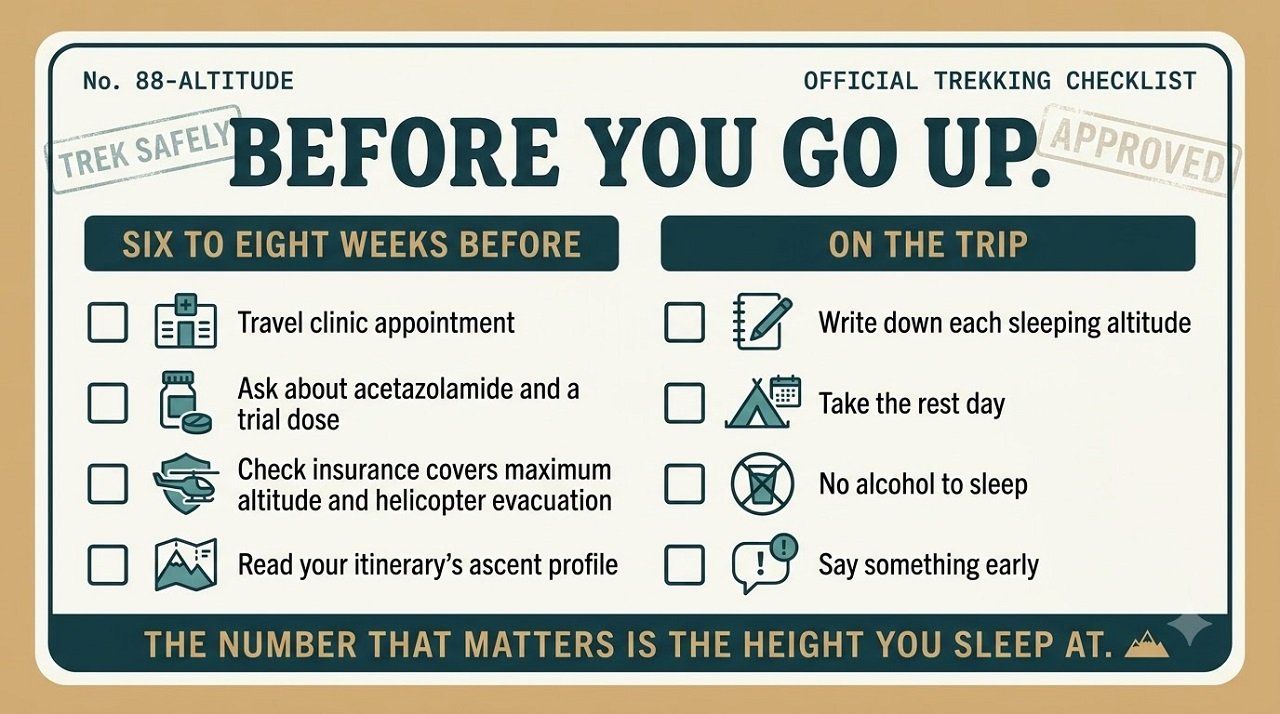
- Write down each sleeping altitude. It is the single number that tells you whether you are ascending safely.
- Take the rest day. Every three or four days above 3,000 m.
- Do not drink alcohol to sleep.
- Say something early. The CDC’s first rule is being willing to acknowledge symptoms. That is harder than it sounds, particularly on a trip you have paid for and trained for.
Conclusion
Altitude sickness is the most predictable illness in travel, and the most preventable.
The evidence points to four things that matter:
Speed of ascent is the dominant risk. Air travel produces a 4.5-fold steeper rise in illness rates than walking or driving. Above 3,000 m, keep sleeping elevation gains to 500 m a day and take a rest day every three or four days.
The symptoms are the same as a hangover. Headache plus nausea, fatigue, dizziness or poor sleep after a recent gain in altitude. If you feel hungover and have not been drinking, treat it as altitude illness.
Acetazolamide roughly halves the risk, and it aids acclimatisation rather than masking the problem. Dexamethasone is for treatment, not routine prevention, because it does not help you adapt.
Never sleep higher with symptoms, and descend if they worsen. That single rule is why the CDC can say there is no reason for anyone to die from altitude illness unless they are trapped.
If you remember one rule, make it this: the height you sleep at is the number that matters. Walk as high as you like during the day. Come down to sleep.
If you are heading to altitude as part of a longer trip through several countries, our guide to reading government travel advisories covers how to check conditions and evacuation infrastructure before you go.
Frequently Asked Questions
How do I prevent altitude sickness?
Ascend slowly. Above 3,000 m, do not increase your sleeping altitude by more than 500 m a day, and take a rest day at the same altitude every three or four days. Avoid going from below 1,200 m to above 3,500 m in a single day. Acetazolamide can be considered for moderate or high-risk ascent profiles, but it does not replace gradual ascent.
What are the first symptoms of altitude sickness?
Headache plus at least one of: loss of appetite, nausea or vomiting, fatigue or weakness, dizziness or lightheadedness, or difficulty sleeping — occurring after a recent gain in altitude. The CDC describes the early symptoms as feeling like a hangover.
Does acetazolamide work for altitude sickness?
Yes. A 2017 Cochrane review found moderate quality evidence that it roughly halves the risk of acute mountain sickness, with a risk ratio of 0.47. The standard prophylactic dose is 125 mg twice a day, started the day before ascent and continued for at least two days at altitude.
When should I descend with altitude sickness?
If symptoms get worse despite rest at the same altitude, descend 300 to 1,000 metres. Descend immediately if there is confusion, difficulty with balance or coordination, breathlessness at rest, coughing up frothy or bloody sputum, blue or grey lips, or unusual sleepiness or difficulty waking.
Is altitude sickness worse if you fly in?
Yes. A meta-analysis of 12 studies covering 11,021 people found the rate of acute mountain sickness rose 4.5 times more steeply with air travel than with slower ascent on foot or by car. Flying directly to altitude is the highest-risk way to start a trip.
Can I take Diamox with other medication?
That is a question for a clinician, not an article. Acetazolamide is a sulfonamide derivative, though the CDC notes cross-sensitivity with sulfa antibiotics has not been reported. Anyone with a history of anaphylaxis to any medication or multiple drug allergies needs caution and medical advice.
Does being fit protect me from altitude sickness?
No. Acclimatisation is a physiological process that takes days regardless of fitness. In the studies reviewed, younger people and women were actually affected more frequently than older individuals and men.
What is the difference between AMS, HACE and HAPE?
Acute mountain sickness is headache plus one other symptom and is common and reversible. HACE is brain involvement — confusion and loss of coordination — and is end-stage AMS. HAPE is fluid in the lungs, causing breathlessness at rest, cough and blood-tinged sputum. HACE and HAPE are life-threatening and require immediate descent.
Sources
- Centers for Disease Control and Prevention. CDC Yellow Book — High-Altitude Travel and Altitude Illness. Updated 23 April 2025. Acetazolamide prophylaxis 125 mg twice daily (250 mg twice daily if over 100 kg), treatment 250 mg twice daily; dexamethasone reserved for treatment, with rebound risk if stopped before acclimatisation; ibuprofen 600 mg every eight hours helps prevent AMS though less effectively than acetazolamide; alcohol and opiates should not be used to aid sleep; acetazolamide reduces acclimatisation time from 3–5 days to one day; three rules to prevent death; portable hyperbaric bag mimics a descent of 1,500–1,800 m; pregnancy and sleeping altitude above 3,050 m; risk categories by pre-existing condition.
https://www.cdc.gov/yellow-book/hcp/environmental-hazards-risks/high-altitude-travel-and-altitude-illness.html - National Travel Health Network and Centre (NaTHNaC), TravelHealthPro. Altitude illness. Altitude illness usually above 2,500 m; high altitude defined as 1,500–3,500 m, very high 3,500–5,500 m, extreme above 5,500 m; avoid travelling from below 1,200 m to above 3,500 m in a single day; above 3,000 m do not increase sleeping elevation by more than 500 m a day and take a rest day every three or four days; acetazolamide 125 mg twice daily starting one day before ascent and continuing at least two days after reaching the highest altitude; trial dose before travel; never ascend to sleep with symptoms; never leave someone with altitude illness alone; insurance must cover the itinerary, disclose maximum altitude and include helicopter evacuation.
https://www.travelhealthpro.org.uk/disease/12/altitude-illness - UIAA Medical Commission. Consensus Statement — Emergency Field Management of Acute Mountain Sickness, High Altitude Pulmonary Edema, and High Altitude Cerebral Edema. Updated 2024, incorporating the Lake Louise Score revision. Depending on ascent profile, up to more than 70% of mountaineers may suffer AMS; risk altitudes approximately 2,500 m for AMS, 3,000 m for HAPE and 4,000–5,000 m for HACE; risk factors include inadequate altitude profile, rapid ascent, previous history and dehydration; people over 65 showed a three-fold higher risk of HAPE but no increased risk of AMS or HACE.
https://www.theuiaa.org/documents/mountainmedicine/English_UIAA_MedCom_Rec_No_2_AMS_HAPE_HACE_2012_V3.3.pdf - BMJ. Prevention of altitude illness in adults: preparing people for travel to high altitude. Published 2 September 2026. Acetazolamide is first-line across Wilderness Medical Society and UIAA guidelines; 2017 Cochrane review found moderate quality evidence of reduced AMS risk (RR 0.47, 95% CI 0.39–0.56); prophylaxis started the night before ascending to a sleeping altitude above 2,800 m; 125 mg every 12 hours for moderate-risk ascent, 250 mg every 12 hours for high-risk ascent; dexamethasone as an alternative where acetazolamide is contraindicated, with low quality evidence (RR 0.60, 95% CI 0.36–1.00).
https://www.bmj.com/content/394/bmj-2026-100532 - Parati G, et al. Flying to high-altitude destinations: is the risk of acute mountain sickness greater? Journal of Travel Medicine, 2023;30(4):taad011. Analysis of 12 studies covering 11,021 individuals ascending to 19 altitudes between 2,200 and 4,559 m; AMS incidence increased linearly with altitude, and the increase was 4.5-fold steeper with air travel than with slower ascent; placebo-arm studies at 3,651–4,559 m reported AMS incidence of 50–100%, averaging 60% on arrival at about 4,163 m; younger people and females appeared more frequently affected.
https://academic.oup.com/jtm/article/30/4/taad011/7001846 - Annals of Emergency Medicine. Acute mountain sickness prevalence in the Khumbu Valley and Manang districts of Nepal. 2022 abstract. Historical disease rates reported in Nepal ranged from 16% to 53%; at Lobuje (4,940 m), AMS incidence was 23% with moderate AMS at 4%; at Manang (3,519 m), AMS incidence was 15% with moderate AMS at 3%; 1,315 participants across 64 countries.
https://www.annemergmed.com/article/S0196-0644(22)00638-2/pdf